Showing posts with label Dr Sally Clendon. Show all posts

Friday, 17 May 2019

Emergent writers

Supporting Emergent Writing 

Hypothesis 1- writing for real reasons
If I encourage my students to write for real reasons, then will they be motivated to write.

In Sally Clendon's research, she says that:
Students who write become better readers, writers, and thinkers.Students learn in classroom writing communities where they have the opportunity to:
– write for real reasons 
– see others write
– interact with peers and teacher about the written content, use, and form. 
– write without standards (i.e., without pressure to write neatly, spell correctly, and follow rules like capitalization, punctuation).

I will share some work that I am doing with one of my students who is working at level one. Due to his intellectual and physical complexities, he requires lots of motivation to engage in writing. My biggest focus at the moment is for my student is to know why he needs to write ie, writing for "Real Reasons"

Writing for real reasons- Level 1


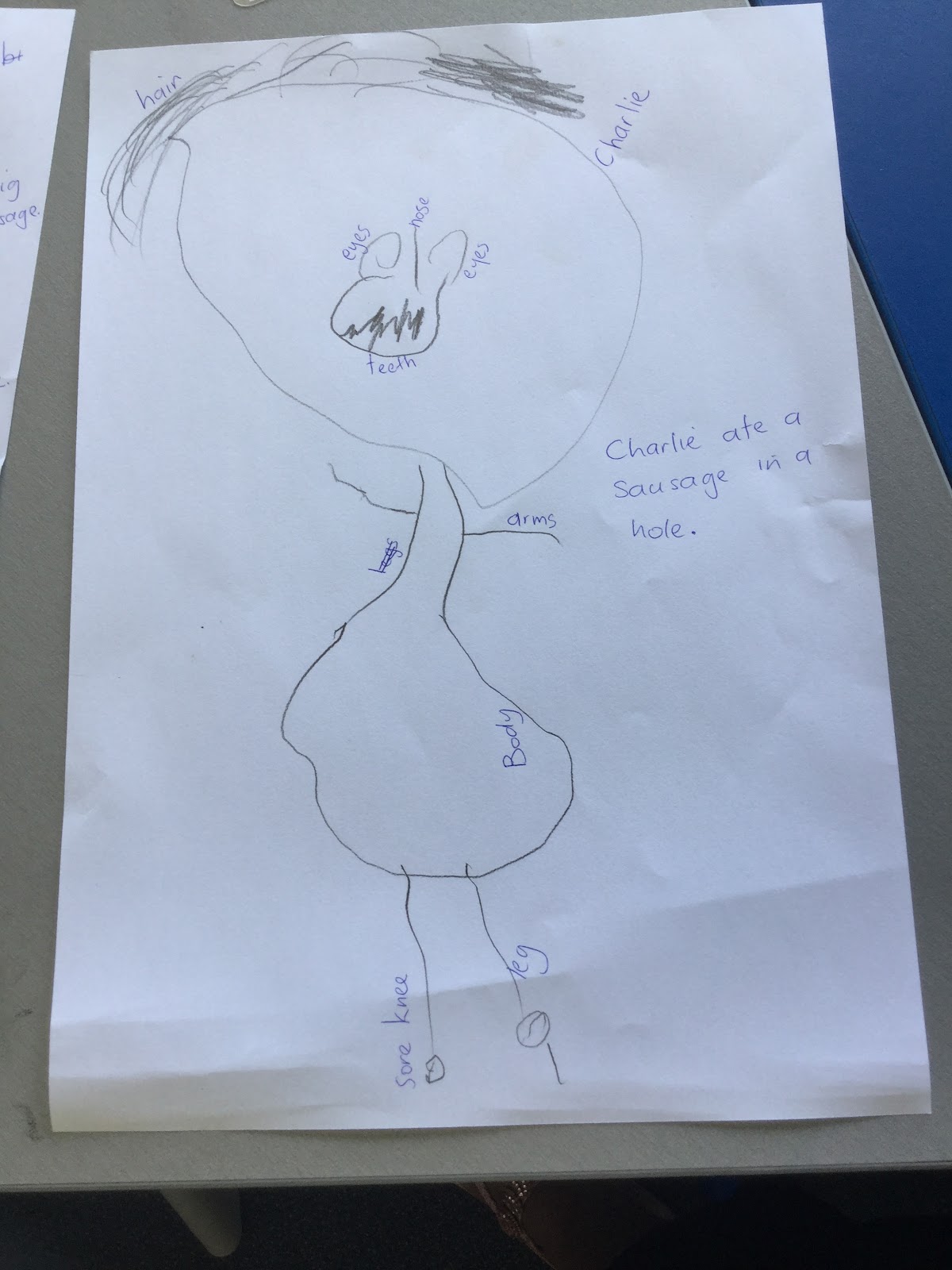
Student drew and shared his experience,
teacher recorded what was said.
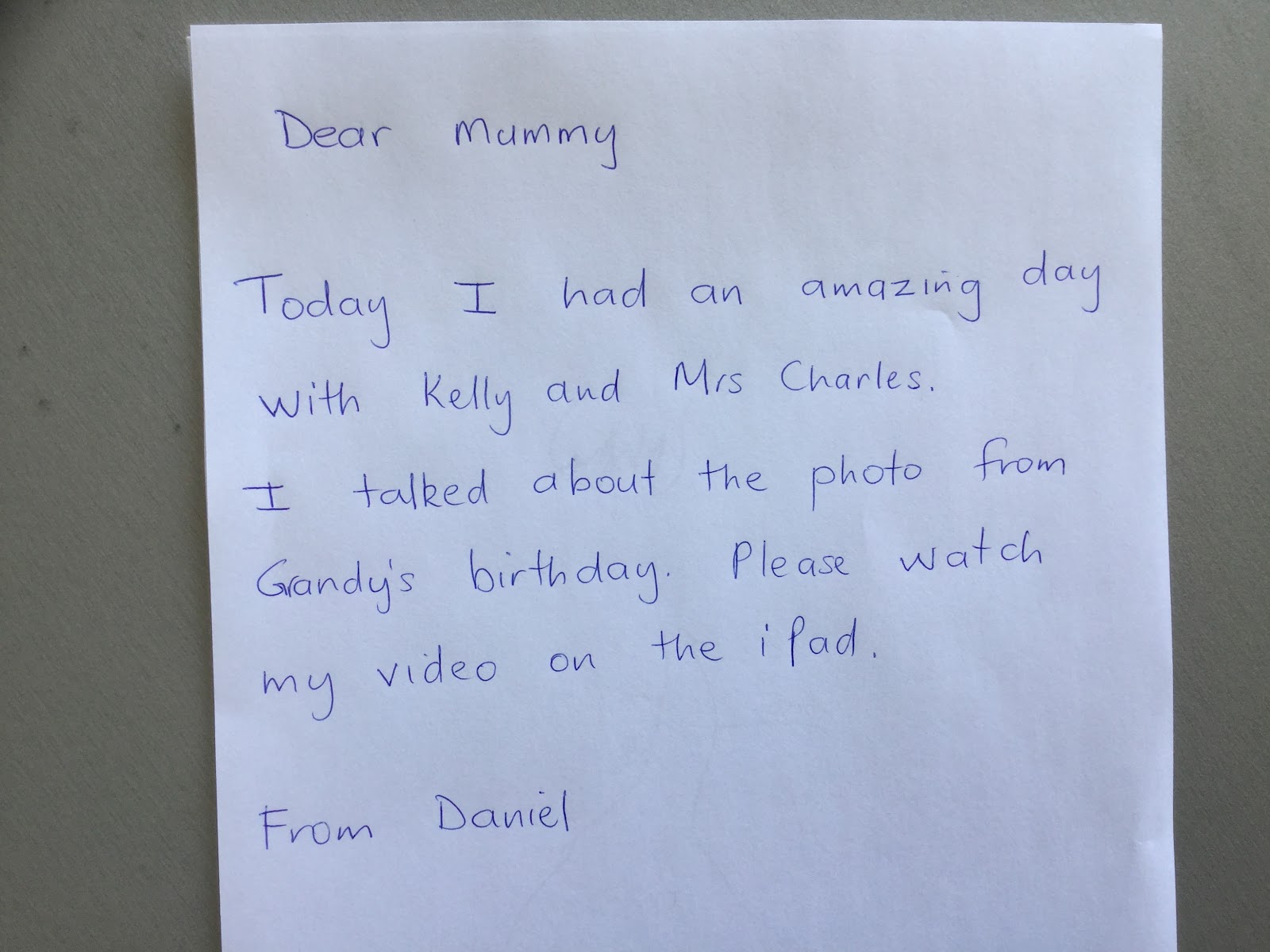
Teacher wrote a letter to family
so the student can see a real reason for writing.
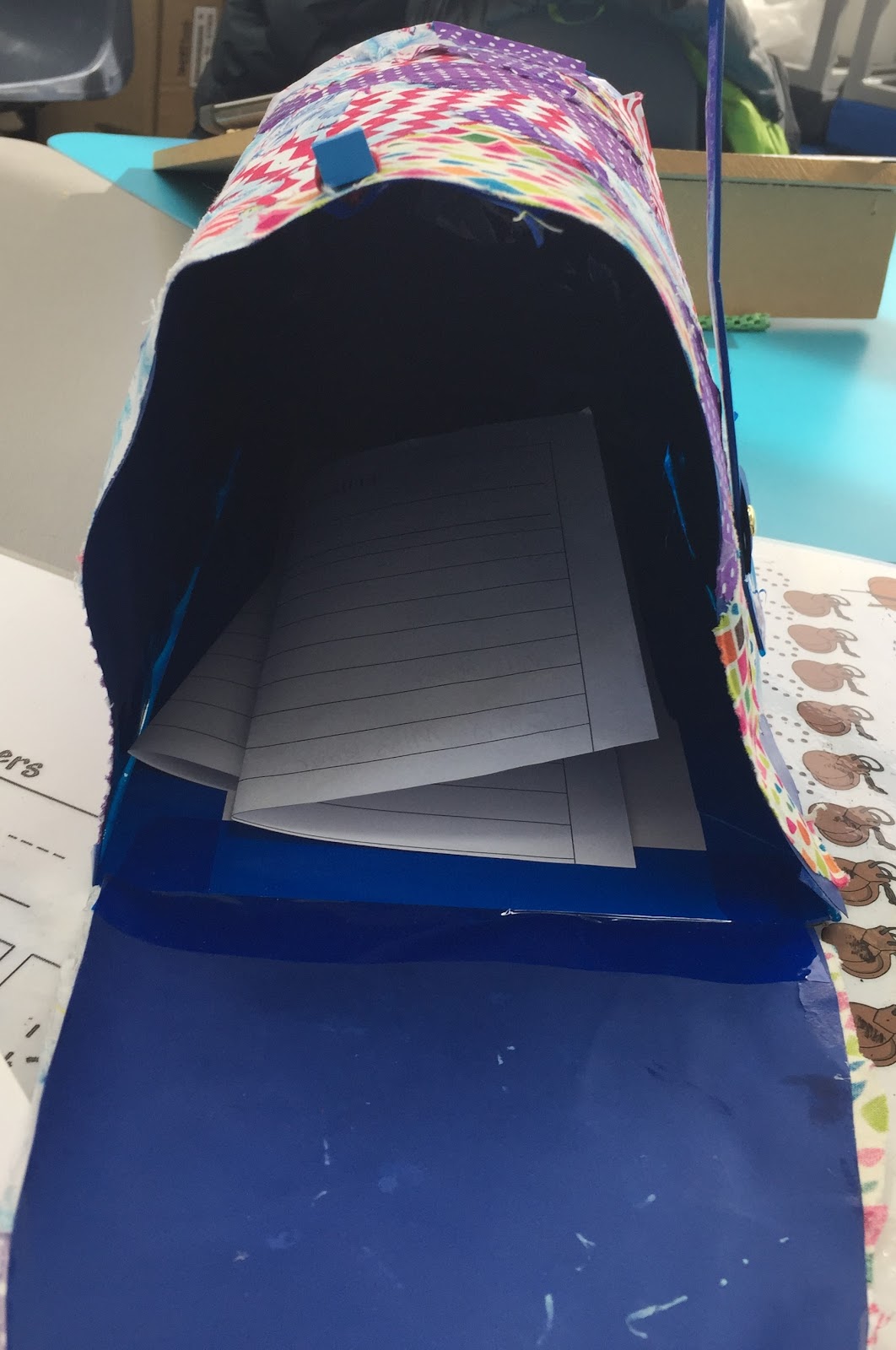
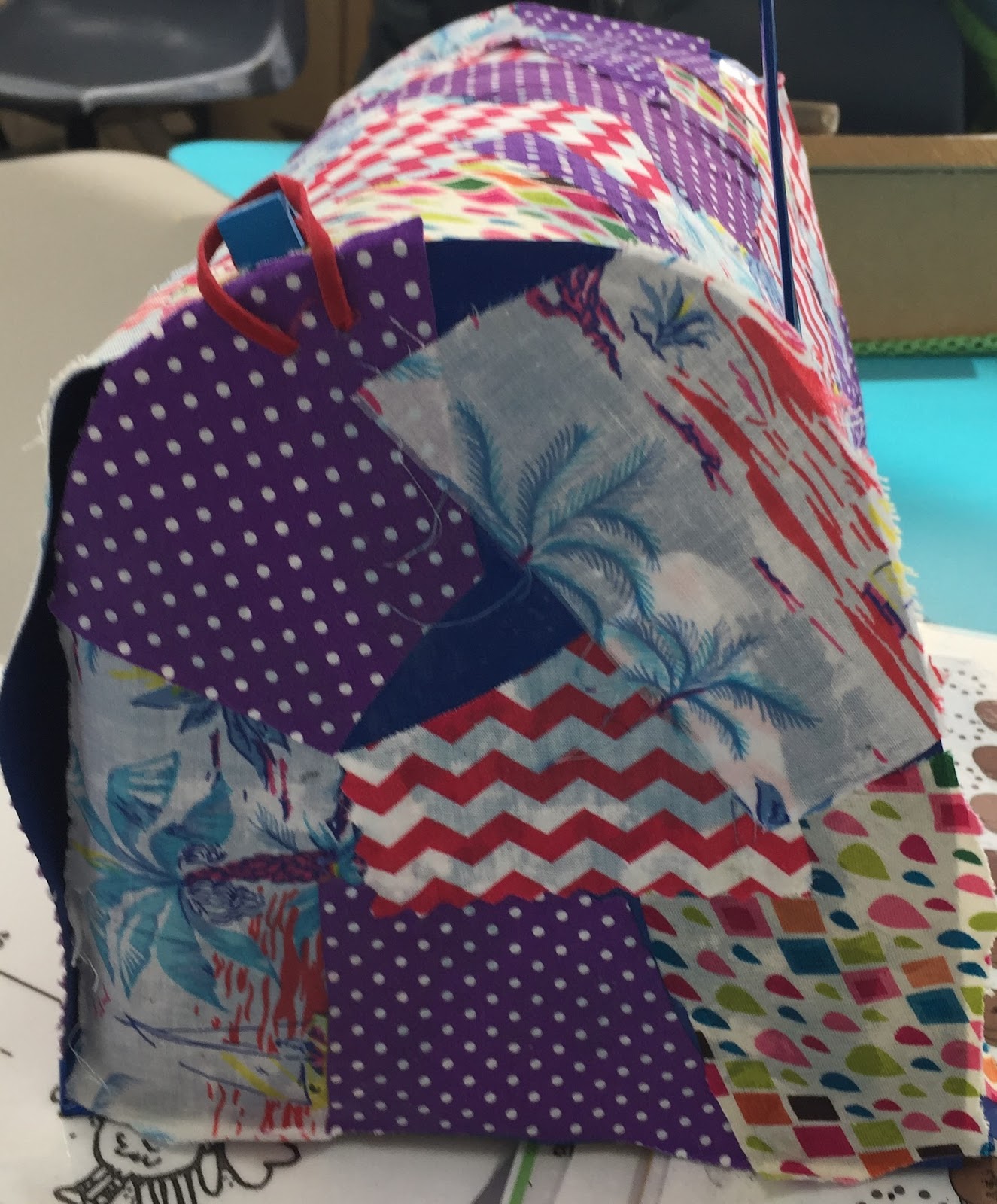
Family made a postbox to sent
and receive letters
Students at school also send letters
Student is asked to describe the object
using his senses.
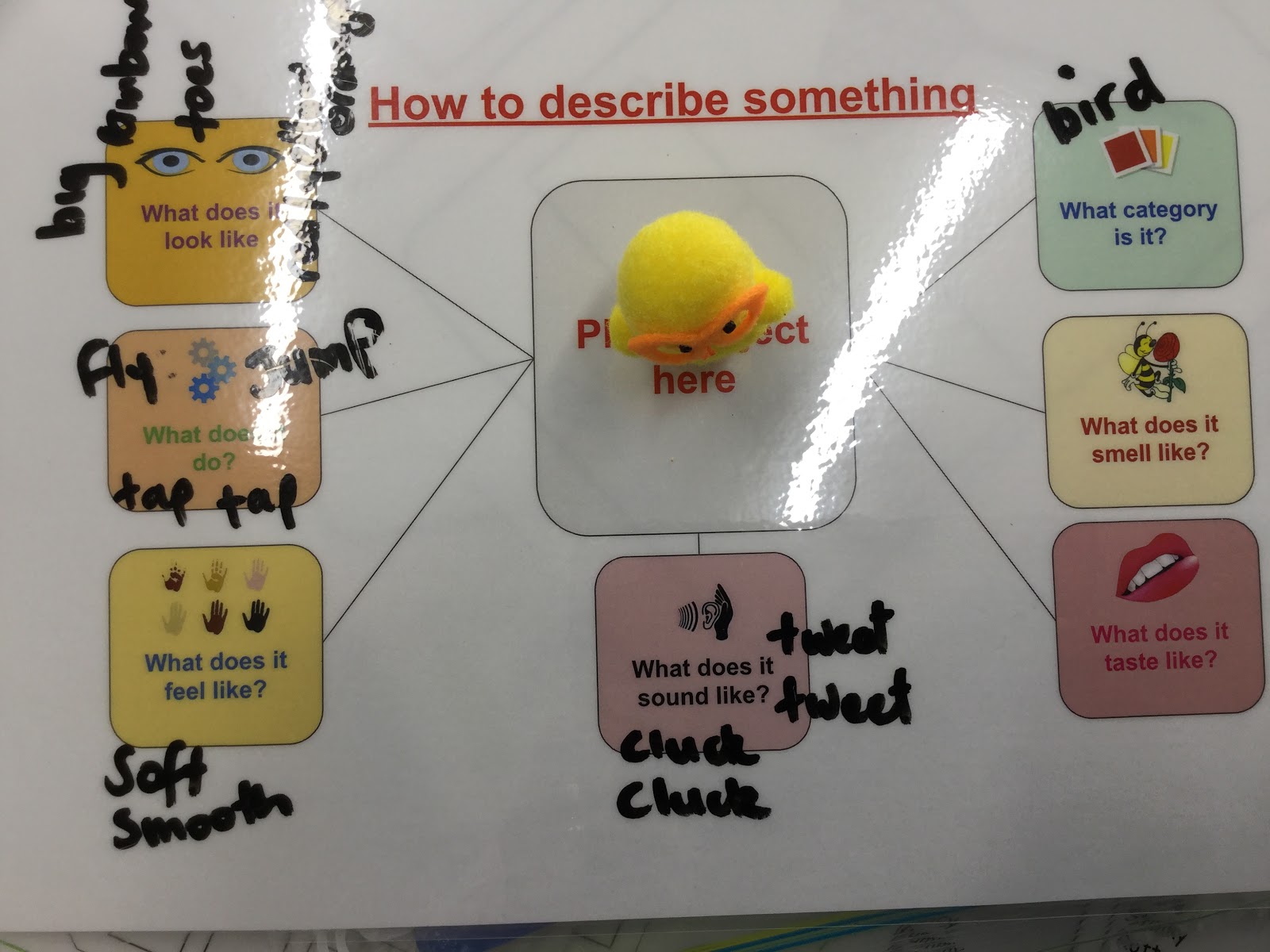
Prompts that can be used


Student tells the story, teacher writes,
leaving opportunities for student to attempt writing.
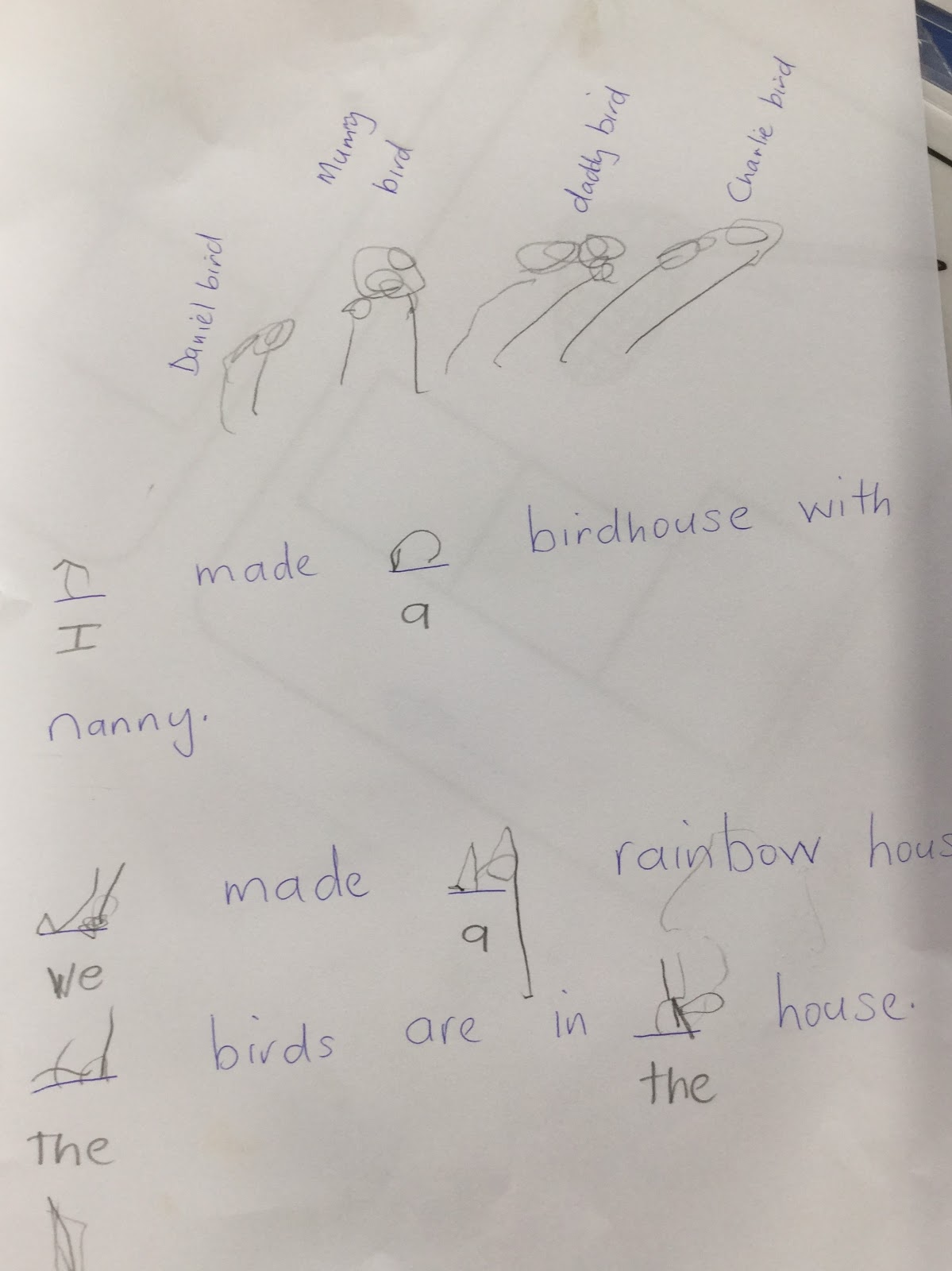
Student attempting independent writing

This student was definitely  motivated, but will my other students be motivated to write for real reasons?

Tuesday, 26 March 2019

Dr Sally Clendon's research on writing


Explain why you judge this to be the most important and catalytic issue of learning for this group of learners this year

Recently Sally presented to Sommerville teachers. From her research, here are some key points to support emergent writers .
 • Children explore and experiment with writing. In the process, they develop understandings about the functions and form of print. These understandings become increasingly sophisticated. Hanser (2006)

Writing Involves … 

• The student’s own ideas and attempts
• Cognitive engagement
• Independent attempts with a complete alphabet
• Needs to be in a real context and for real reasons
Clendon, Van Rensburg, & Mackwood (2015)

We should be teaching:
  • Writing for Real Reasons 
  • Signing In - in the morning
  • Writing their name on work/drawings
  • Personal Connections/ recounts
  • Related to guided reading purposes 
  • Letters / emails to parents/other family members
  • Note to home/school
  • Thanks you notes 
  • Book report 
  • Writing to/about favorites / their weekend
  • Shopping lists
  • Blogging

What Writing is Not ... 

• Copying – this is a fine motor task that does not facilitate the process of writing – Copying is about forming letters – 
Copying does NOT :
• Teach that print has meaning 
• Teach WHY people write 
• Teach what it means to be a writer 
• Teach a student how to think like a writer, Roy (2010) 
• Tracing – this is another fine motor task that does not facilitate the process of writing 
• Chunked messages – using a name stamp is a matching task, pressing a button to reveal a pre-stored message is a starting place not a product of writing. 
• Dictation – this removes the motor barrier but does not allow the student to independently engage with print. 
• Hand over Hand 
• Worksheets! Roy (2010) 


Saturday, 2 March 2019

Why a writing inquiry?


Why I chose a writing inquiry?


1. Summarise the challenge of student learning you plan to focus on in this inquiry. Be as clear and specific as you can about the evidence you have about this to date.

I have been in special education for almost 20 years.  I have spent many years implementing routines and research based strategies and I have seen the dfference that this has made to my students.
At Sommerville we have been fortunate enough to have Dr Sally Clendon take professional development over the last few years. As a result of Sally Clendon's guidance as well as strong routines and behavior support, I have noticed a difference in my students writing skills. 

My students need to learn how to manage themselves as a prerequisite to becoming engaged in learning. They also need to be able to relate to others in order to participate in group work and social situations and of course participating and contributing is reliant on all of these. 
My inquiry will be focusing on improving these Key Competencies to see a shift in my students writing. 


Jane Farrall describes writing as a complex task, involving ideas, language, words, spelling and transcribing or selecting letters.  We need to teach all of these skills – and eventually students need to be able to do all of these, within the one task, to become writers.  


Due to its complexities, many students find writing challenging and many teachers struggle to find methods to effectively teach the skill. I am going to use a of range strategies to show how students managing self and relating to others and if this will help them improve their writing.