Showing posts with label Learn. Show all posts

Tuesday, 28 April 2020

COLLABORATION -What does the evidence tell us about what works?


Contributing to the collaborative endeavour 

What does the evidence tell us about what works?
Except for the Education Review Office

For a Community of Learning | Kähui Ako to develop and function effectively the participants need to shift both their thinking and practice.

  • For some, the biggest challenge is to enlarge the focus to include not only the students in their own school but also the students in all the other schools. (In a Special Education setting, we know that this will be very challenging)
  • Being part of a Community of Learning | Kähui Ako means accepting collective responsibility for equity and excellence across all the schools in the community. 
  • Collective responsibility positions leadership differently. 
  • Leading improvement across a range of diverse contexts can require different expertise and different ways of working. 
  • Members of a community need to be clear about the purpose of leadership roles and the responsibilities they entail. 
  • Effective leadership is vital if the joint work that goes into a Community of Learning | Kähui Ako is to contribute to collective outcomes. 
  • Equitable allocation of resources, especially time and expertise, is essential for enabling a community to function in ways that grow capability and capacity. 
  • To contribute to and benefit from a Community of Learning | Kähui Ako, each participating organisation needs to be able to provide robust analysis and interpretation of their outcomes data along with priorities for improvement. 
  • Openness to learning and a willingness to share information and evidence is important conditions for collaborative inquiry that leads to improved professional practice and enhanced student outcomes.

Building collective capacity for improvement The framework below identifies what the evidence suggests is important in the development of collective capacity for improvement. This framework is a starting point for further developing the New Zealand evidence base. The sections that follow describe the components of the framework and include examples of effective practice.


Collaborative inquiry and working that challenges thinking and practice 

  • In a Community of Learning | Kähui Ako, the focus of collaboration is on improving outcomes for students through changes in instructional practice. 
  • Collaboration involves working together on shared challenges that have been identified through the use of evidence. 
  • Effective collaboration engages participants in ongoing cycles of inquiry: 
  1.  identifying what is going on for students in relation to valued outcomes 
  2.  using credible evidence, identifying a problem of practice that will stretch existing knowledge and capacity but also be manageable 
  3.  designing, trying out and testing changes in practice that are aimed at solving the identified problem 
  4.  accumulating evidence of impact, refining or discarding ideas based on evidence of their effectiveness, embedding changes that prove to be effective into daily practice 
  5.  identifying the next student-related challenge.

  • Effective collaboration is characterised by dense, frequent sharing of knowledge among participants, with the aim of addressing the identified challenges. 
  • They also connect outwards, to gain new knowledge that will complement what they already know and to maintain connections with, and actively participate in, larger networks.
  • Educators experience increased efficacy and agency when leaders provide opportunities and support for engaging in collaborative inquiry.

Friday, 17 May 2019

Emergent writers

Supporting Emergent Writing 

Hypothesis 1- writing for real reasons
If I encourage my students to write for real reasons, then will they be motivated to write.

In Sally Clendon's research, she says that:
Students who write become better readers, writers, and thinkers.Students learn in classroom writing communities where they have the opportunity to:
– write for real reasons 
– see others write
– interact with peers and teacher about the written content, use, and form. 
– write without standards (i.e., without pressure to write neatly, spell correctly, and follow rules like capitalization, punctuation).

I will share some work that I am doing with one of my students who is working at level one. Due to his intellectual and physical complexities, he requires lots of motivation to engage in writing. My biggest focus at the moment is for my student is to know why he needs to write ie, writing for "Real Reasons"

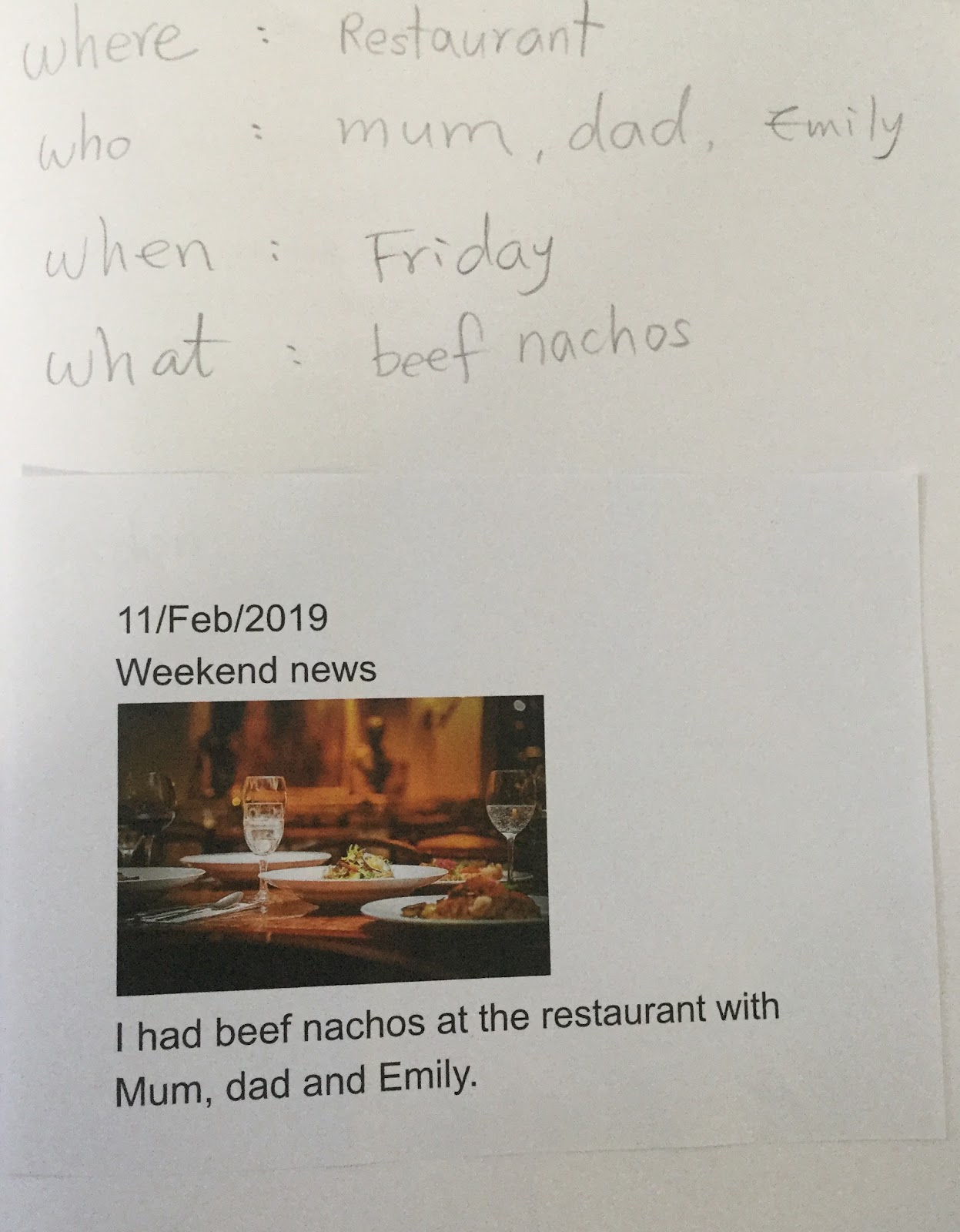
Writing for real reasons- Level 1


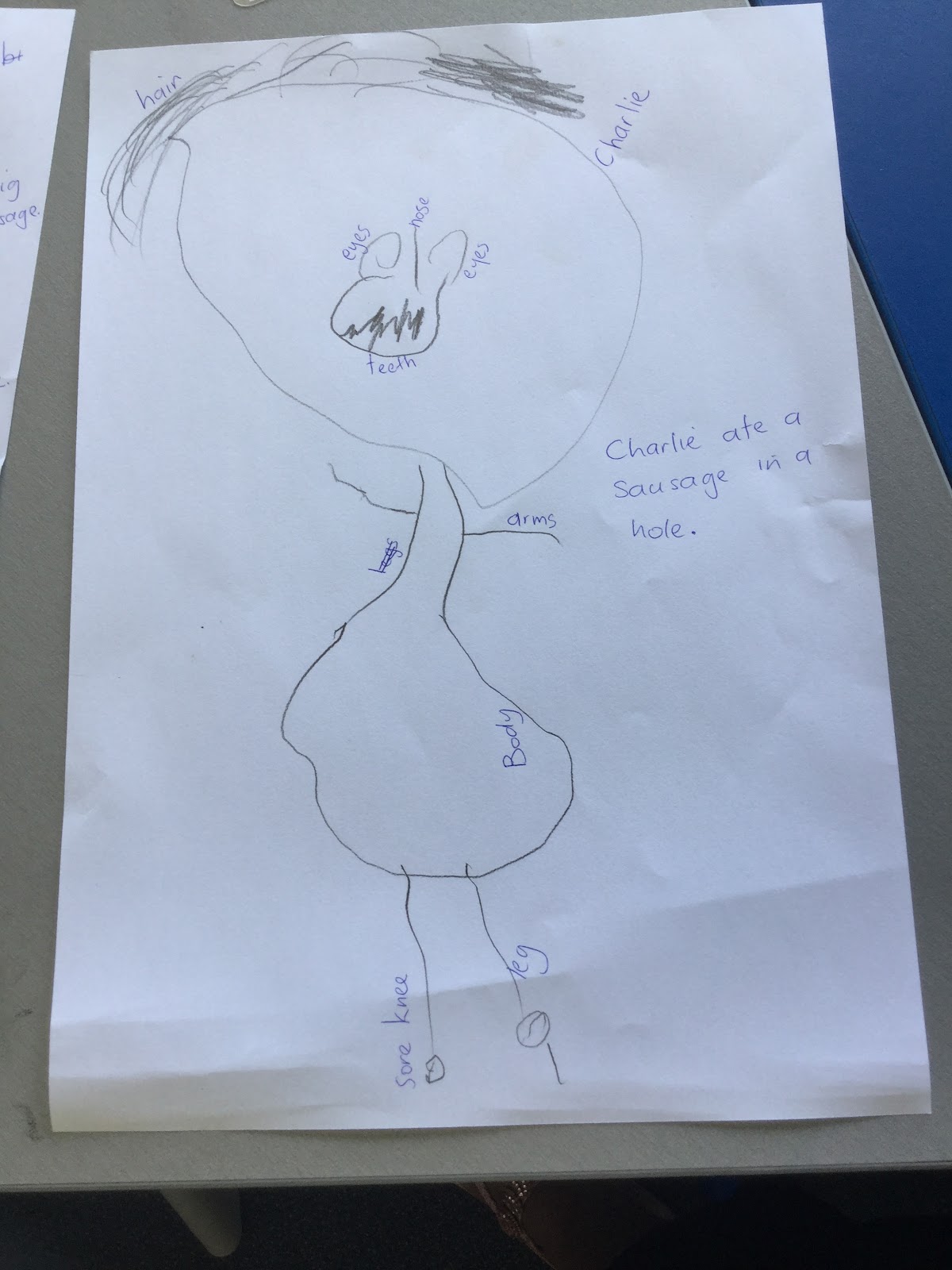
Student drew and shared his experience,
teacher recorded what was said.
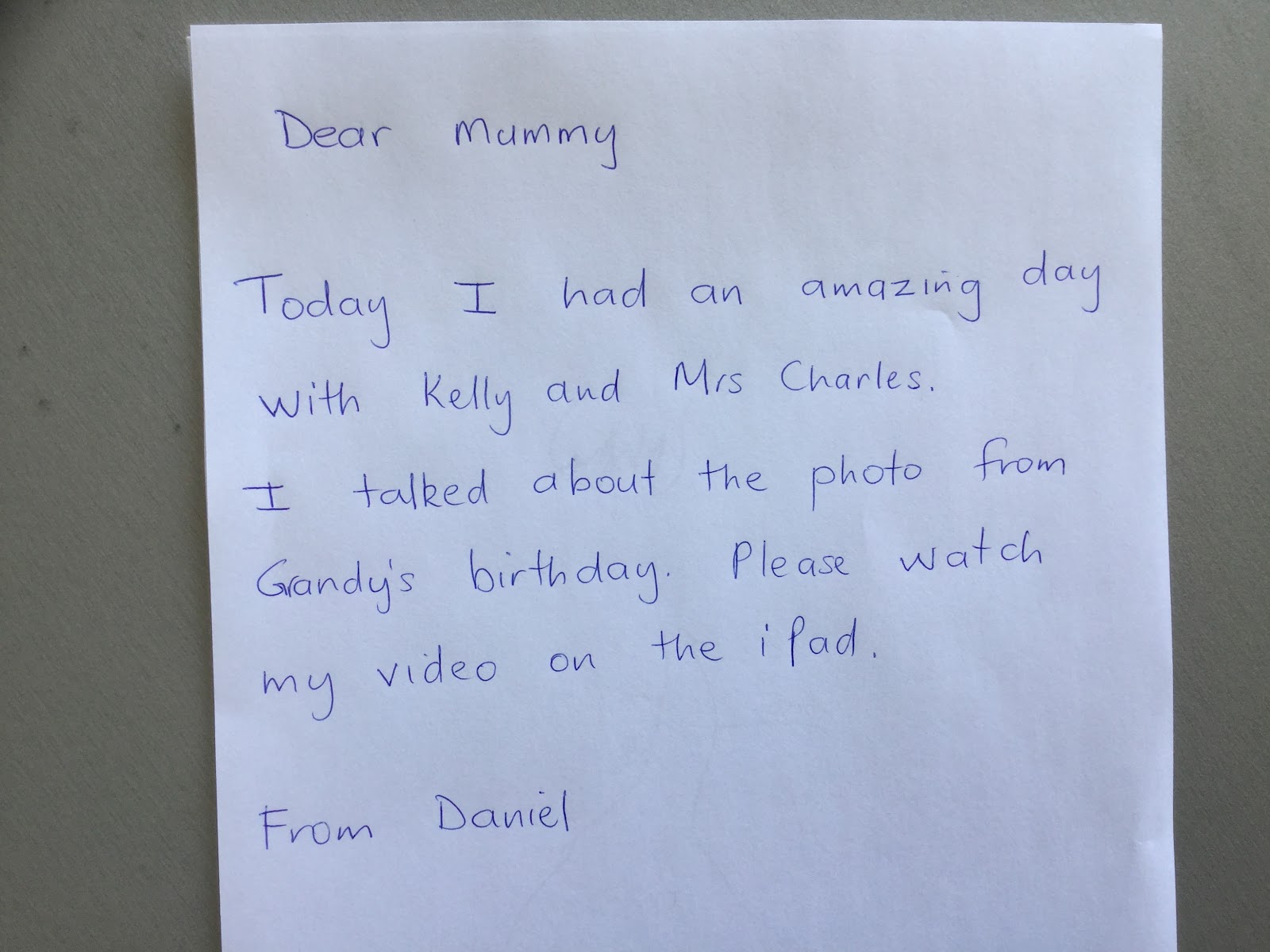
Teacher wrote a letter to family
so the student can see a real reason for writing.
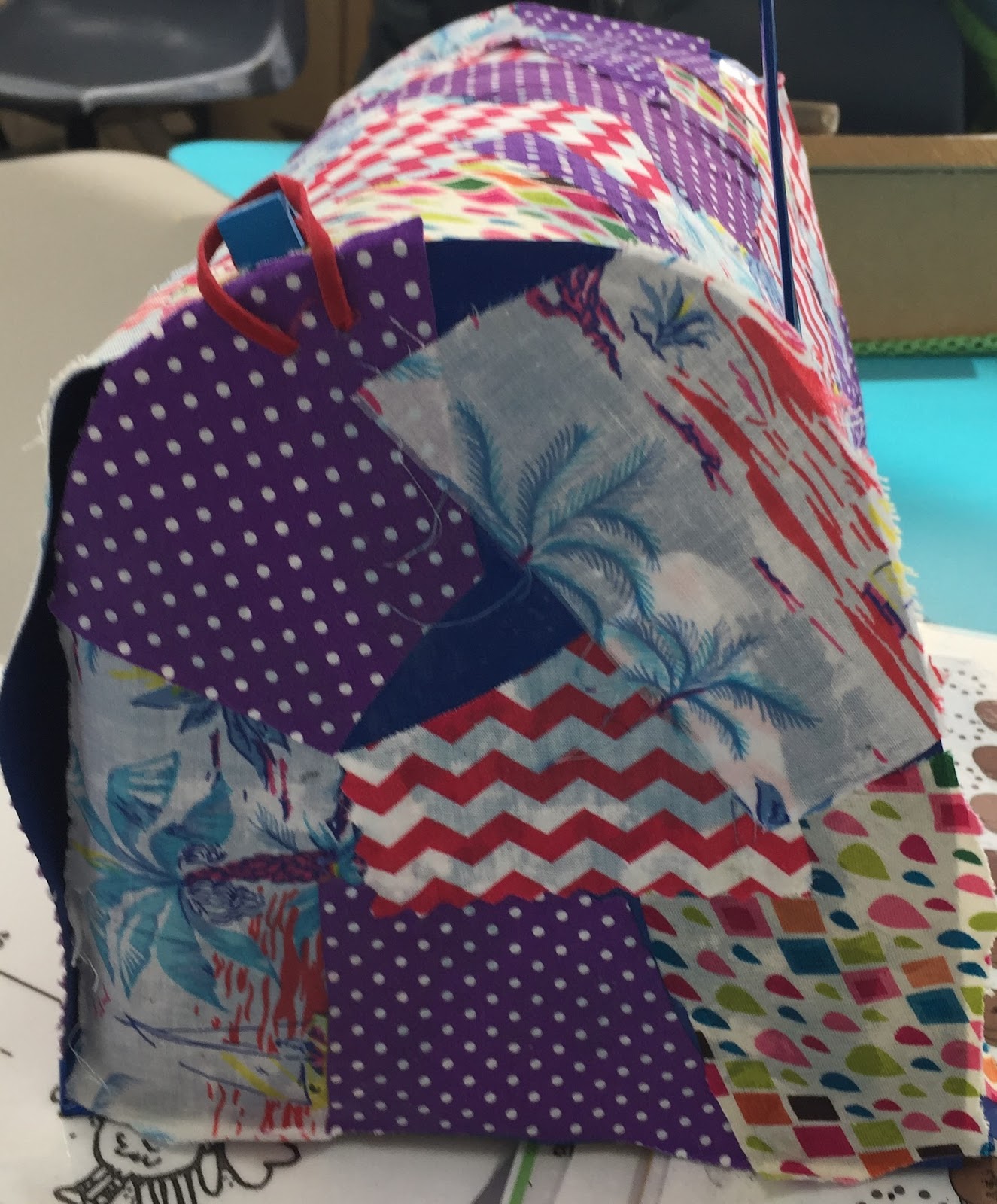
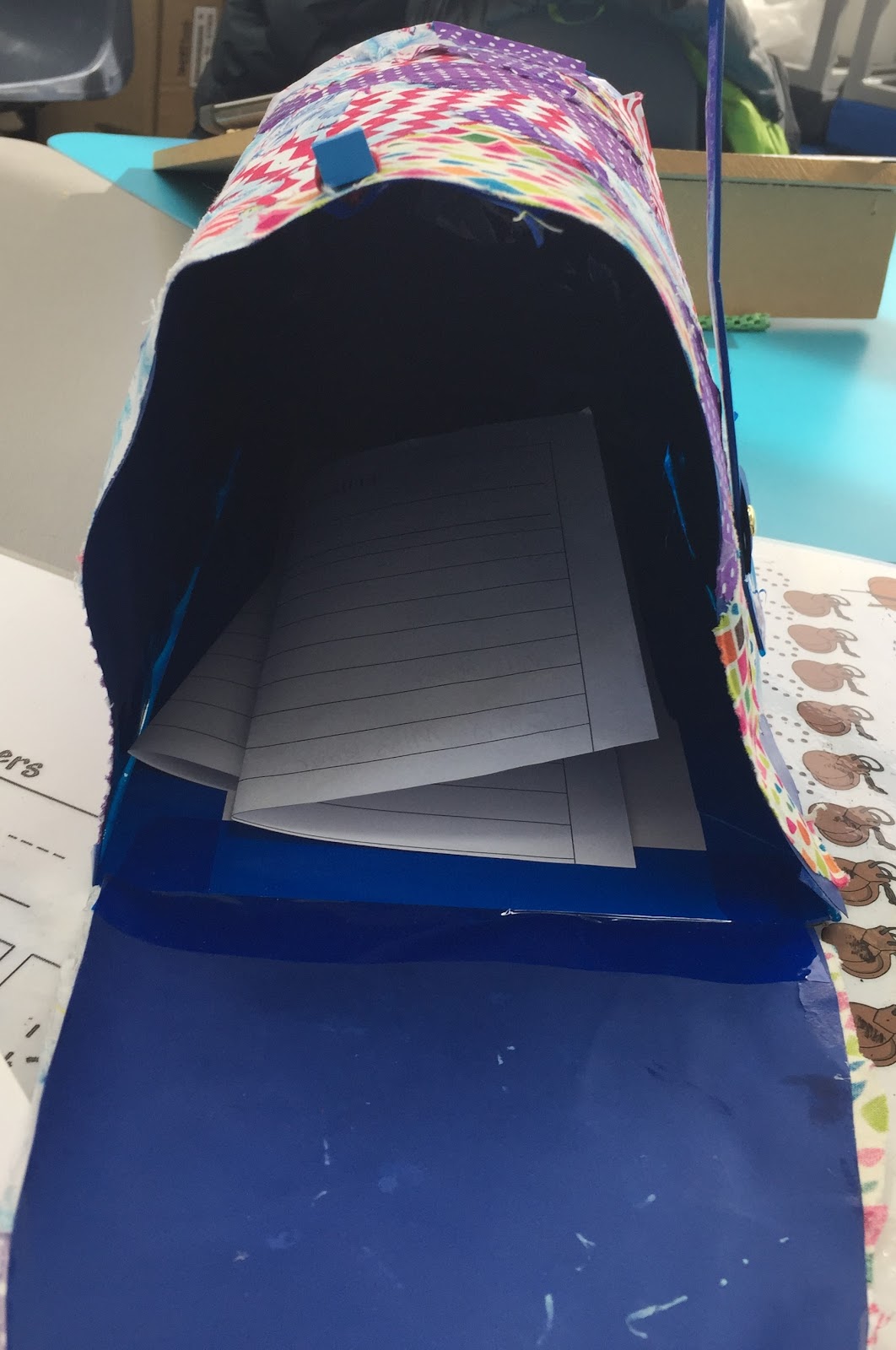
Family made a postbox to sent
and receive letters
Students at school also send letters
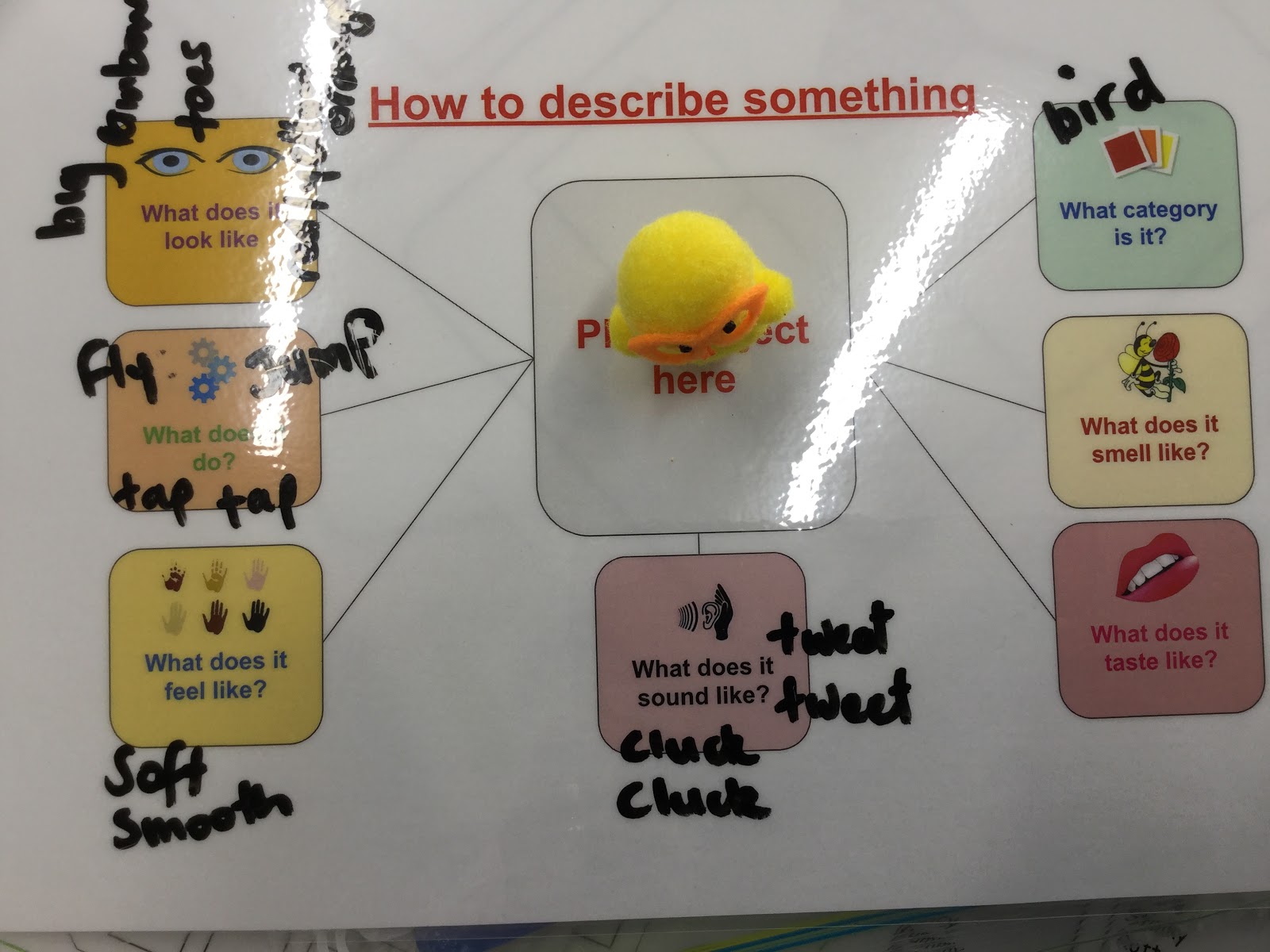
Student is asked to describe the object
using his senses.
Prompts that can be used


Student tells the story, teacher writes,
leaving opportunities for student to attempt writing.
Student attempting independent writing

This student was definitely  motivated, but will my other students be motivated to write for real reasons?

Tuesday, 7 May 2019

Developmental writing scale


Developmental writing scale for assessment 


In my previous post I discussed using the development writing scale. This is what Jane Farrall says:
I hope this will help you work out the level that your student might be on.

Using the Developmental Writing Scale for Writing Assessment

by Jane Farrall

The Developmental Writing Scale (Sturm et al 2012) is a key part of this. This scale is so useful as it allows us to track a student's writing progress from emergent to conventional with a 14 point scale.  Most importantly it also has accommodations listed for students who use alternative pencils - which is important for most of the students I work with.
The Developmental Writing Scale
As I said earlier, the Developmental Writing Scale is a 14 point scale that goes from emergent to conventional and then through the early stages on conventional writing - in the Australian Curriculum the highest level on the scale is at a grade 4 and 5 writing level. We use the level descriptors to decide what level each piece of writing is at - and then those level descriptors help us to work out what skills we need to teach them to move to the next level.
And now, to demonstrate how this process works, let's look at each level on the scale along with examples.

Level 1 

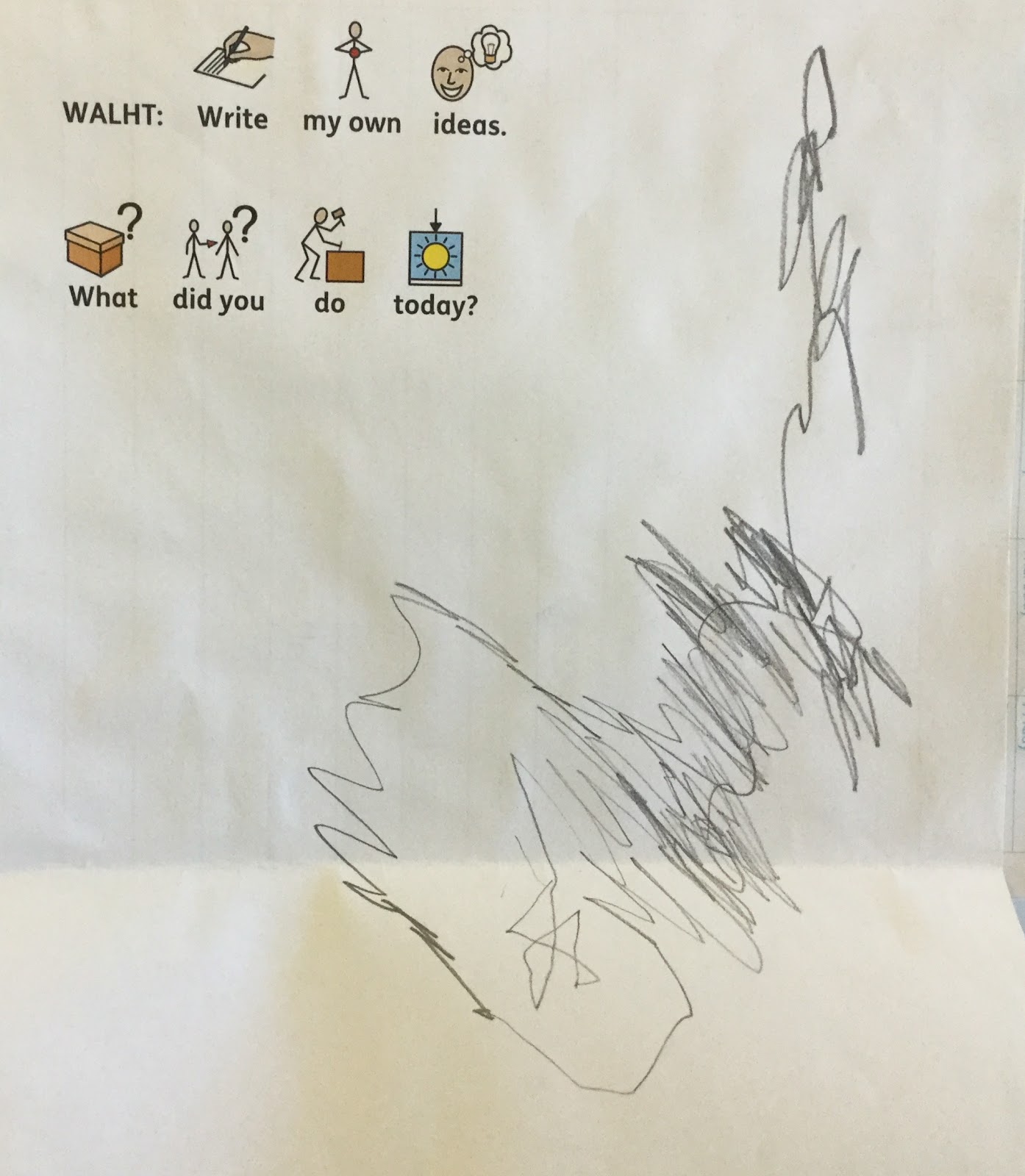
Drawing - lines and curves that appear to represent objects.  Accommodations: Selection of a picture by a [student] who cannot hold a traditional pencil or marker.

If we go back to my blog post called Emergent Writing: Focus on Function, this is how we would rate Mathilda's first "writing sample" - which I have also put below.  This is the stage at which an individual doesn't recognise the difference between writing and pictures - and this is the point at which we (the adults) do lots and lots of attributing meaning and assuming competence to teach them them that they are a writer.  Then we continue to use those same two adult superpowers to teach them that print has meaning and that everything they say they can write.  Frequent writing practice with adults attributing meaning and assuming competence is how individuals move to the next point on the scale.

Level 1 Sample, Drawing

Level 1 Sample, generated with a flip chart - student selected the picture when we did the extra task as explained below
The accommodations part of this scale is REALLY important for any student using a keyboard or flip chart.  A sample collected with these alternative pencils, and which is scored at level 1, needs to be accompanied by an extra task with the student.  Basically, we provide the student with some writing and a picture.  The easiest way to do this is to use a children's picture book.  I prefer to use one which has writing on one side and a picture on the other.  I then ask them to "show me the writing". If they select the picture, then they are rated as a level 1.   The reason for this task being so important will become apparent as we get to level 3 on the scale.

Level 2

Scribbling - Continuous vertical, circular or wavy lines arranged linearly across the page, which may include letter-like forms, but with the majority of shapes not recognizable as letters. Accommodations: if an [individual] uses a keyboard [or flip chart], this level would not be used.

For individuals with good fine motor skills, this is where they start to demonstrate that they have had enough experiences with text to know that there is a difference between print and picture - and then this starts to show up in their writing.  Below is a perfect example of this stage.  This is an old sample that my friend Dianne sent me - a letter from her nephew to his grandmother.

Level 2 Sample Handwriting
Again, the accommodation part of the scale for level 2 is really important - and this is basically that if the student is using an alternative pencil, then we don't see level 2 in their writing development - they jump straight from level 1 to level 3.

Level 3

Letter Strings (no groups) - Handwritten or typed strings of letter but not grouped into words. Accommodations: alphabet display (e.g. paper copy) and standard or electronic keyboard access (e.g. on screen keyboard or AAC system)

For a student holding a pen or a pencil, this is where they show us that they've learned enough about text to know that it is composed of letters - and so we start to see those letters in their writing.  For students who are using a keyboard or a flip chart, we've already been seeing letter strings because their alternative pencil is setup for them to write with letters.  BUT remember the accommodation from level 1.  If we do that separate "show me the writing" task with them and they select the picture, then we would rate their sample as level 1.  If they show us the writing, then we rate their sample as a level 3.   And the accommodation from this level is a lot easier - it's just suggested alternative pencils that writers can use.  Just remember no matter what level you are at you need to have access to all the letters of the alphabet.

Level 3 Sample, generated with an alternative pencil (keyboard in Proloquo2Go)

Level 3 Sample, handwriting

Level 4

Letter Strings Grouped in Words - Strings of letters grouped into "words" (ie with spaces between at least two groups of letters) but with no intelligible words. Accommodations: Alphabet display (eg paper copy) and standard or electronic keyboard access (e.g. on screen keyboard or AAC system)

This is the level where a developing writer shows us that they have learned one more thing about writing - which is that they know that as well as letters there are also spaces. It should look very similar no matter what pencil is being used!

Level 4 Sample, generated with a flip chart (full stop added by adult who was transcribing the letters).

Level 5

Strings of letters grouped into "words" with only one possible real word (ie two or more letters in length) set apart, written repeatedly or embedded in a string of letters. Accommodations: Word bank or word prediction software.

And now developing writers have paid enough attention to text, that they incorporate one real word into their own writing. The real word has to be two or more letters - so you can't count "I" or "a" . Sometimes we find that the one real word is a high frequency word, and sometimes it's a high interest word. Oh - and you might also see spaces disappear again at this point.

Level 5 Sample, typed on a computer

Level 5 Sample, generated using the keyboard in Proloquo2Go (I have blanked out the student's name)

Level 6

Two or three different intelligible words - Two or three different intelligible words embedded in strings, separated by spaces, or in a list format. Single letter words such as "I" and "a" must be separated by spaces to count as an intelligible word. Accommodations: Word bank or word prediction software.

At this level, most writers are now spelling words phonetically. We also get some writers who meet all the criteria for this level who spell their two or three words perfectly as they develop more and more sight words. For a sample to be rated Level 6 there are also a couple of rules about spaces. The first Level 6 space rule is that spaces don't have to be there! The main example within the scale is : IYTKTOSMNTHETR (I like to swim under water). There isn't a single space - and that's fine. The second rule of spaces is that if you want to count I or a you need it to be separated by a space from any surrounding words - otherwise it's too easy to do them by chance.
Level 6 Sample, handwriting. "Jax is bin monitor"

cat eat fla.

Level 6 Sample. typing. "cat eat fly"

Level 7

Three or more different intelligible words in a list - Three or more related words. Accommodations: Word bank or word prediction software.

This is often one of the easiest levels to identify. There are usually a lot of nouns in the sample and there are no "little words". The two rules about spaces from Level 6 are also still in force.

Level 7 Sample, generated using the keyboard in Proloquo2Go "water, swimming, goggles, evie"

Level 8

Partial sentence of more than three words - More than three different intelligible words, with at least two of them in a partially formed sentence (ie gramatically related parts of a phrase, clause or sentence). Accommodations: Word bank or word prediction software.

The description says it all! It's also worth knowing that spaces are still optional at this stage.

Philip and Jayden playing you no

Level 8 Sample, typing "Philip and Jayden playing Uno"

Atthpiooltogoswimmig shaun taz

Level 8 Sample, typing "At the pool to go swimming shaun taz"

Level 9

One to two complete sentences - Sentences have a subject phrase and a verb phrase. End punctuation is not necessary. Accommodations: Word bank or word prediction software.

Follow the level description - and remember spelling doesn't have to perfect, it just needs to be at a level where the intended audience can read the piece of writing. This is also the first level where spaces are needed between words - and they need to be used for the future levels too.
Level 9 Sample. typed on the keyboard in Proloquo2Go and inserted into the message window

Level 10

Three or more unrelated sentences (neither coherent nor cohesive) - Sentences have no coherent topic (ie sentences are not related). Accommodations: Word bank or word prediction software.

For this level, we want to see end punctuation. We also need to remember that spelling still doesn't have to be perfect - just at a level where the intended audience can read it. And this rule also applies to the last four levels. Always remember that we teach spelling and words in the working with words block - not within writing.
Level 10 Sample, written on iPad (app used not recorded) "I am reading a book I like reading. I have a watch. I have a bike."

Level 11

Three or more related sentences (coherent but limited cohesive) - Organized writing with three or more sentences on a coherent topic but with limited cohesion between sentences (ie sentences can be reordered without changing meaning). Accommodations: Word bank or word prediction software.


Level 11 Sample, handwriting

Level 12

Three or more related sentences that cannot be reordered (coherent and cohesive) - Organised writing with a coherent topic (ie on a consistent theme) and use of cohesive devices (eg pronoun or synonym replacement, logical connectors, subordinating conjunctions, conclusions that refer to prior content) across three or more sentences so that sentences cannot be reordered without meaning. Accommodations: Word bank or word prediction software.

On Thursday 2nd or August I went to the basketball carnval at Pdsadena high school. on the Photo I am sitting with my mate. I am happy. We one six games and lost one game. I scored somes three ponters. I would love too join a basketball team.
Level 12 Sample, typing

Level 13

Two coherent paragraphs of at least three cohesive sentences each - organised writing with a coherent main topic and two cohesive subsections (subtopics or story parts) with at least two sentences elaborating the meaning of each. Accommodations: Word bank or word prediction software.

Level 13 Sample, typing

Level 14

Three or more coherent paragraphs of at least three cohesive sentences each - organised writing with a coherent main topic and at least three cohesive subsections (subtopics or story parts), with at least [three] sentences elaborating the meaning of each. Accommodations: Word bank or word prediction software.

My long weekend
On Friday, I watched the two spare garbage trucks. One was doing the garbage, the other was doing the recycling. They were both white ones. They met together on my street. The recycling came before the garbage. It was good. I also went out with mum and dad for a drive. I saw a few buses which were 769, 791, 773, 776, 755, 1755, 1471, 1210, 2456, 2554, 2515, and 1810. It was a good day.
On Saturday I went shopping with mum and got stuff from coles before Showdown 45. The power lost to the crows. The power should have won.
On Sunday I went for a drive with mum and dad. We drove past Pasadena High School where I went for the Basketball carnival. It was a good drive.
I had a great weekend.
Level 14 Sample, typing

And that's the whole scale! Hopefully those explanations and examples have helped you in your students' writing.

Tuesday, 30 April 2019


Literacy for all

Describe your process for developing hypotheses  (hunch) e.g. what you read, who you talked with.
I met with sally Clendon and we talked about a range of strategies I could try with the diverse nature of the students I work with.

Explain the hypotheses  about teaching that you decided were MOST worth testing, and why.
We do not believe that a different curriculum is required in order for children with disabilities to succeed in learning to read and write. We have learned, however, that teachers must attend consciously and thoughtfully to the significant learning differences of children with disabilities in order to make good instruction accessible to these students.”
Karen Erickson and David Koppenhaver from Children With Disabilities: Reading and Writing the Four Blocks Way


Writing is Important 
• Writing is a window into a child’s current understandings. 
• Students who write become better readers, writers, and thinkers 
• Some children may learn to access written communication via writing where others may learn to access spoken communication via writing. 
• Writing is a form of communication 
• Children with significant disabilities benefit from the SAME literacy experiences and instructional approaches used with typically developing children .


In my previous blog post, I spoke about using an alternative writing tools/pencils, the link below has some useful information on this.
I will be investigating a range of writing tools and see what works best for my students with diverse challenges.

http://literacyforallinstruction.ca/alternative-pencils-2/

Alternative writing tools/Pencils 

• For students who can not independently access traditional writing utensils, we must consider alternatives. 

• Anything that provides the student with access to ALL 26 letters of the alphabet 

• Pick a “pencil” (writing tool) that has the least brainpower going to form so you can focus on the function of writing. – With limited, unreliable movements, pick one that has the most potential to develop 

• Students do not need to demonstrate the physical ability to use an alternative pencil in order to get one. 

• Students do not need to know their letters or colors to start using an alternative pencil (even the color coded eye gaze frame!)

• Students learn about pencils and letters BY WRITING

. Early writing is a PERFECT way to work on motor skills and letter knowledge 


The Role of Early Writing for Typical Developing Students

Emergent literacy learning starts early with the meaningful social interactions that occur between parents and their children. The modeling of writing and the many purposes of print and how it is formed (i.e. watch mum make shopping list, pay a bill or write a card) is embedded in their daily lives.  A young child may begin exploring writing by making a mark or scribble on a page (or wall), mimicking what they have seen. Parents quite naturally celebrate the writing their children produce. In the process, children develop understandings about print and begin developing the required motor skills. With time and opportunity, a child's' developing understandings become increasingly sophisticated and create the foundation for conventional writing. As a child’s writing moves into the conventional, letters and spellings appear that others can recognize, read and further celebrate. 


 The Difficulties of Writing for Students with Significant Disabilities

Students with significant disabilities, including those with complex communication needs, have fewer and qualitatively different emergent literacy experiences than their typically developing peers (Koppenhaver et al, 1991; Light & Kelford Smith, 1993; Light, Binger & Kelford Smith, 1994). The physical care involved in students with multiple needs often limits the time available for literacy activities. Limited expectations may also play a role in the availability of writing opportunities. These limited expectations also lessen communication opportunities and social interactions that expose students to the purpose(s) of print. If mobility, positioning and vision issues are not considered and appropriately addressed, simply seeing others write, which provides the model to support understanding about the purpose or function of print, may be nonexistent or fragmented. Sometimes teacher training and education is a barrier as well. Meaningful opportunities and alternative pencils/writing tools must be available for student with significant disabilities to progress through the same developmental writing phases as their typically developing peers.


Wednesday, 17 April 2019

Learn. Create, Share

Complexities of writing

For many of the students I work with, some of whom have complex communication needs and/or relatively limited experiences of generating language, writing presents many challenges. 

Image result for writing difficulties

To develop writing skills Jane Farrall says, that children need to learn to generate an idea, to think about language, think about the words, the spelling, controlling their “writing tool”, etc. 

The complexity involved in becoming a writer means that we want to help each student to find the simplest writing tool for them. We want to make their writing tool something that uses minimal physical and cognitive energy so that they can focus on all the other aspects of writing development. In the link below, you can view the range of special needs tools.


The Manaiakalani Data, tells us that writing is an area that as a whole most schools are do very well in. At Sommerville this is an area that majority of our students have difficulties with.

I will be embracing the Manaiakalani Pedagogy of Learn, Create, Share to reflect on my inquiry. I began with LEARN and will add Create and Share as I progress.


Focusing Inquiry
Possible Actions
Learn
Focusing Inquiry
“What is important (and therefore worth spending time on) given where my students are at?”

Achievement Challenge 5

Improve the achievement of students with additional needs in the learning areas of English/key competency using language symbols and texts


In 2019 for my inquiry I will be focusing on how the Key Competencies (Managing Self and Relating to Others) increase student engagement and improve writing outcomes for students aged 5-12.
Gather evidence
Since the beginning of the year,
I have collected Anecdotal evidence eg. Students work samples, observations, formative assessment tasks, student voice and  parent voice,
Because all my students are working within level one of the curriculum, I will be using the developmental writing scale to see where my students are at. This writing scale has been so helpful, because it is the first to accommodate students who are using an alternative pencil. (Egs in my previous posts)
Scan
These are some comments from a  few of my parents:
  • ’I would just like to see my child pick up a pen and write.’
  • ‘When will my child write his name on his work.’
  • ‘I write letters to my child, I would like her to write back.’
  • ‘I would like my child to write a simple thank you note to his grandparents.’
Comments from Students:
  • ‘I can’t write’
  • ‘I want to talk not write’
  • ‘I can’t spell’
  • ‘You write for me.’
  • ‘I don’t know what to say.’
Identify Trends


In special education, due to the complex needs of students, families would like to see their children write for real reasons.
Most students lack imagination and need a purpose to write.
One of the biggest challenges I’ve noticed is that writing:
  • needs to have a purpose for our students, if not, they are not motivated to write.
  • Students need to know that they are communicating a message.
  • Every child needs a writing tool and the alphabet.
  • Most see writing as a motor task, where they are copying, instead of writing.
Hypothesis (Hunch)

Whenever we write, we need to think of an idea, then think of the language to describe the idea, then we need to think of the words and how to spell them- and finally we have to select the letters for each word. In the beginning each of  these skills takes a lot of effort and planning.
I plan on using a range of special education pedagogy and managing self strategies when working with students.
Research
Sally Clendon and Jane Farrall’s research and work on teaching writing to children with  special needs has been really helpful.

Reflect
Ongoing reflection on the work that I am doing. Consultation with staff and colleagues. Looking at what the research says. Adaptations will be made as needed.

Wednesday, 10 April 2019

What writing looks like at some Sommerville classes.


Emergent Writing

At Sommerville most students are emergent writers
Children explore and experiment with writing. In the process, they develop understandings about the functions and form of print. These understandings become increasingly sophisticated. Hanser (2006)
Writing is about ...
  Sharing ideas and communicating with others.
  Writing for real reasons.
  Thinking and actively constructing print.
  Exploring the alphabet.
   Making independent attempts.

At Sommerville, we believe that every child needs a writing tool                                                     

 A writing tool includes:
  • – Pencils / Pens
  • – Flip charts
  • – Alphabet boards
  • – Eye gaze
  • – Keyboards with talking word processors
  • – Alternate keyboards
  • – Simplified keyboards
  • – Onscreen keyboards
  • – iPads and apps
  • – Speech generating devices
  • - Predictive text software

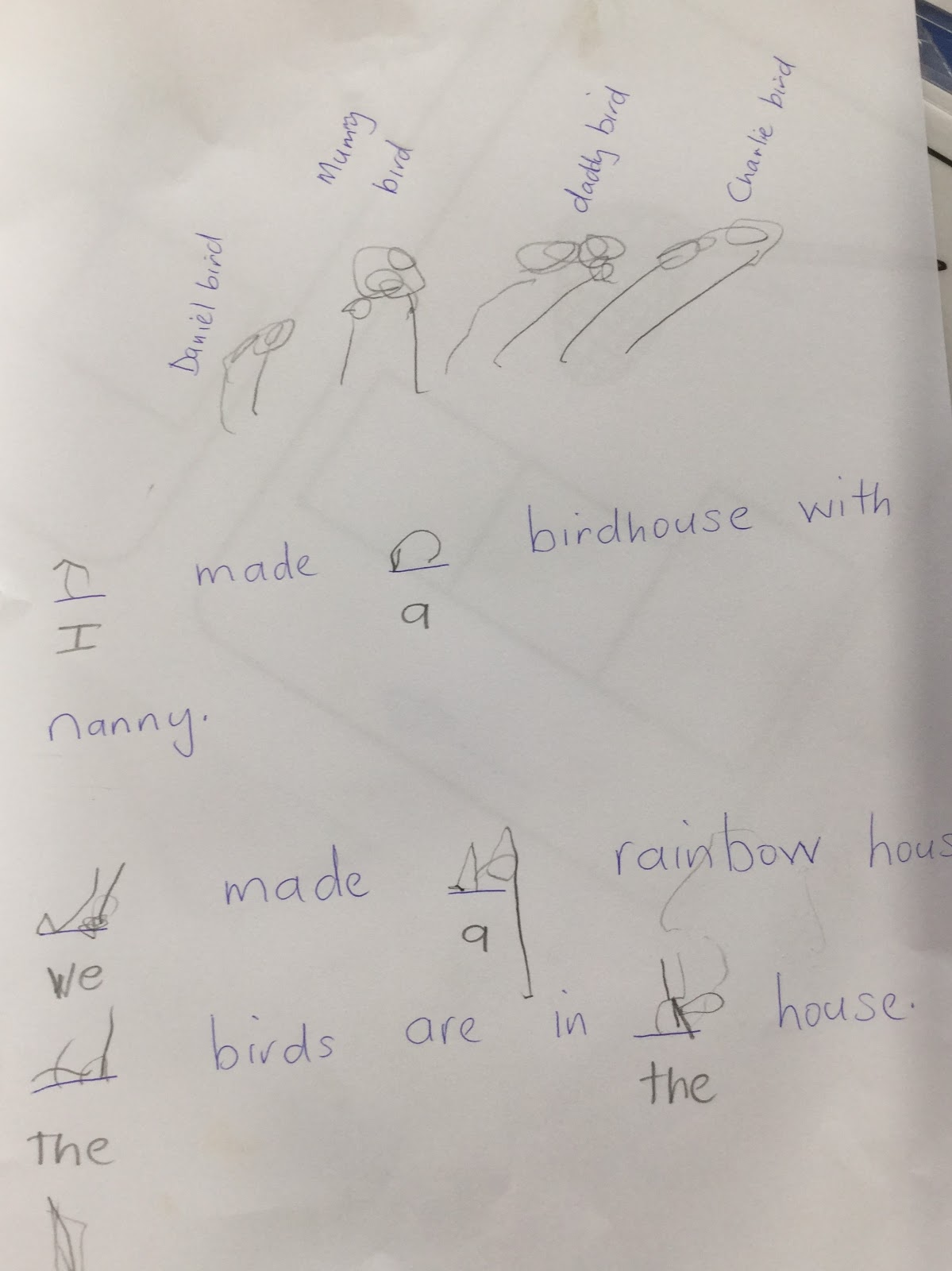
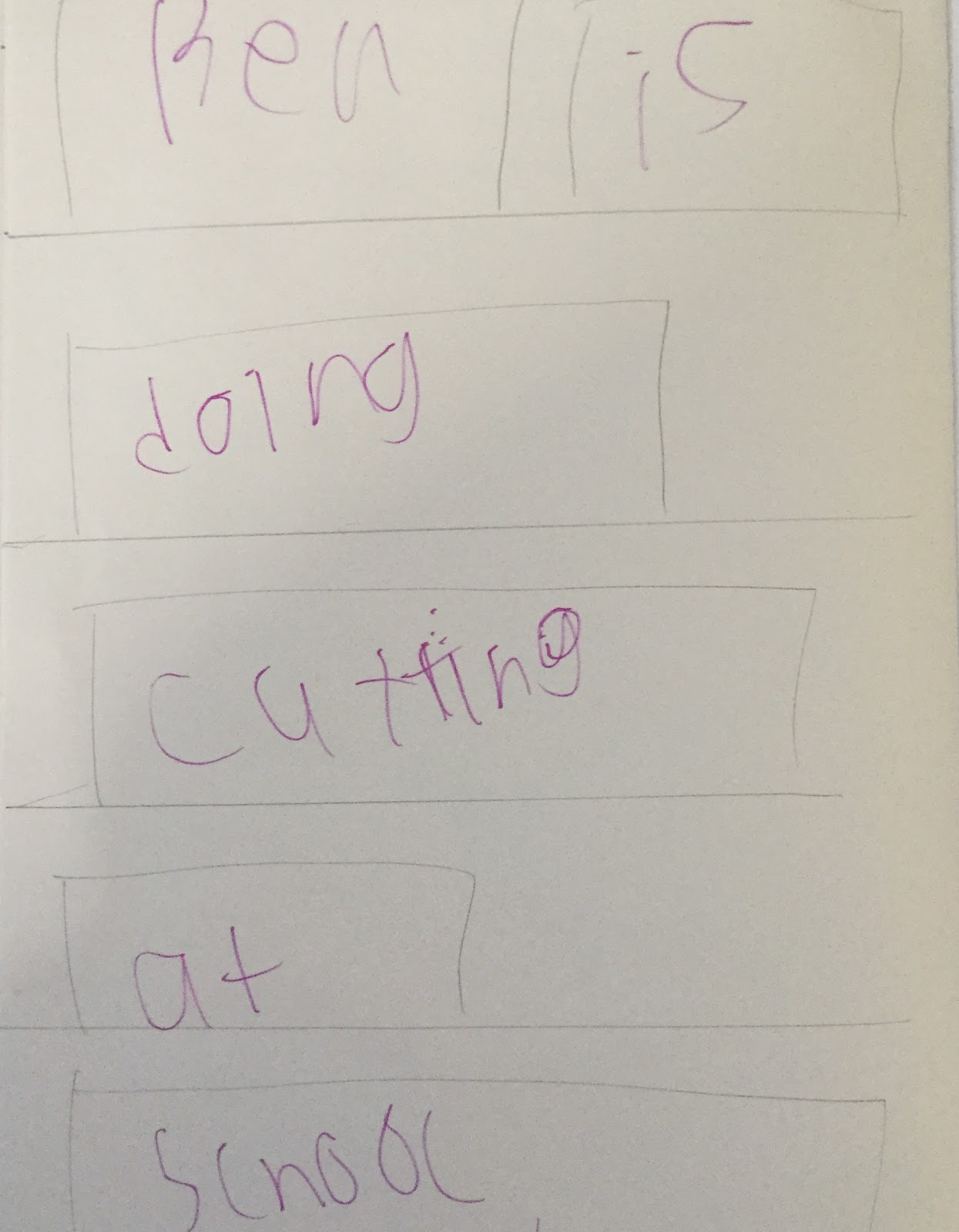
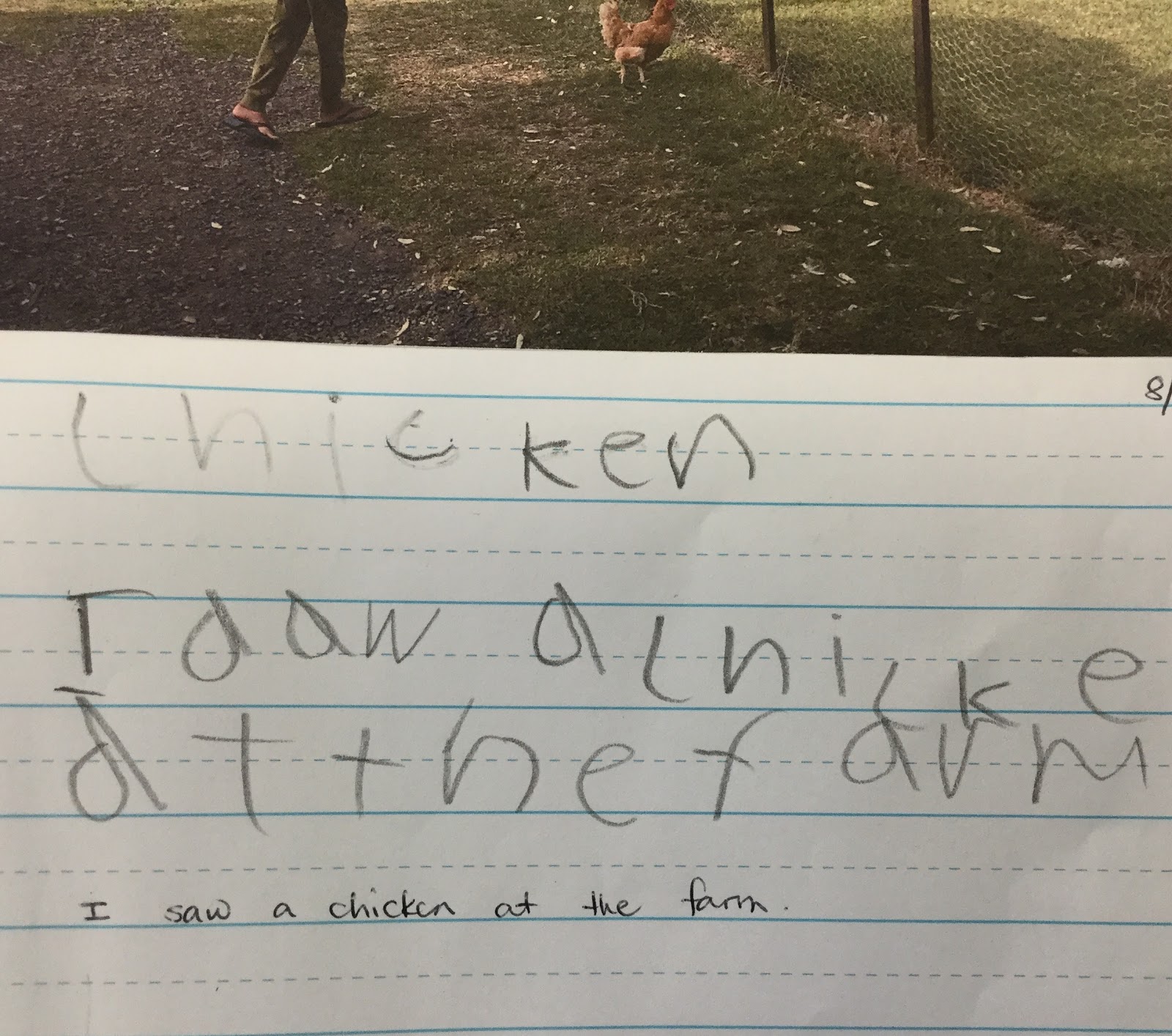
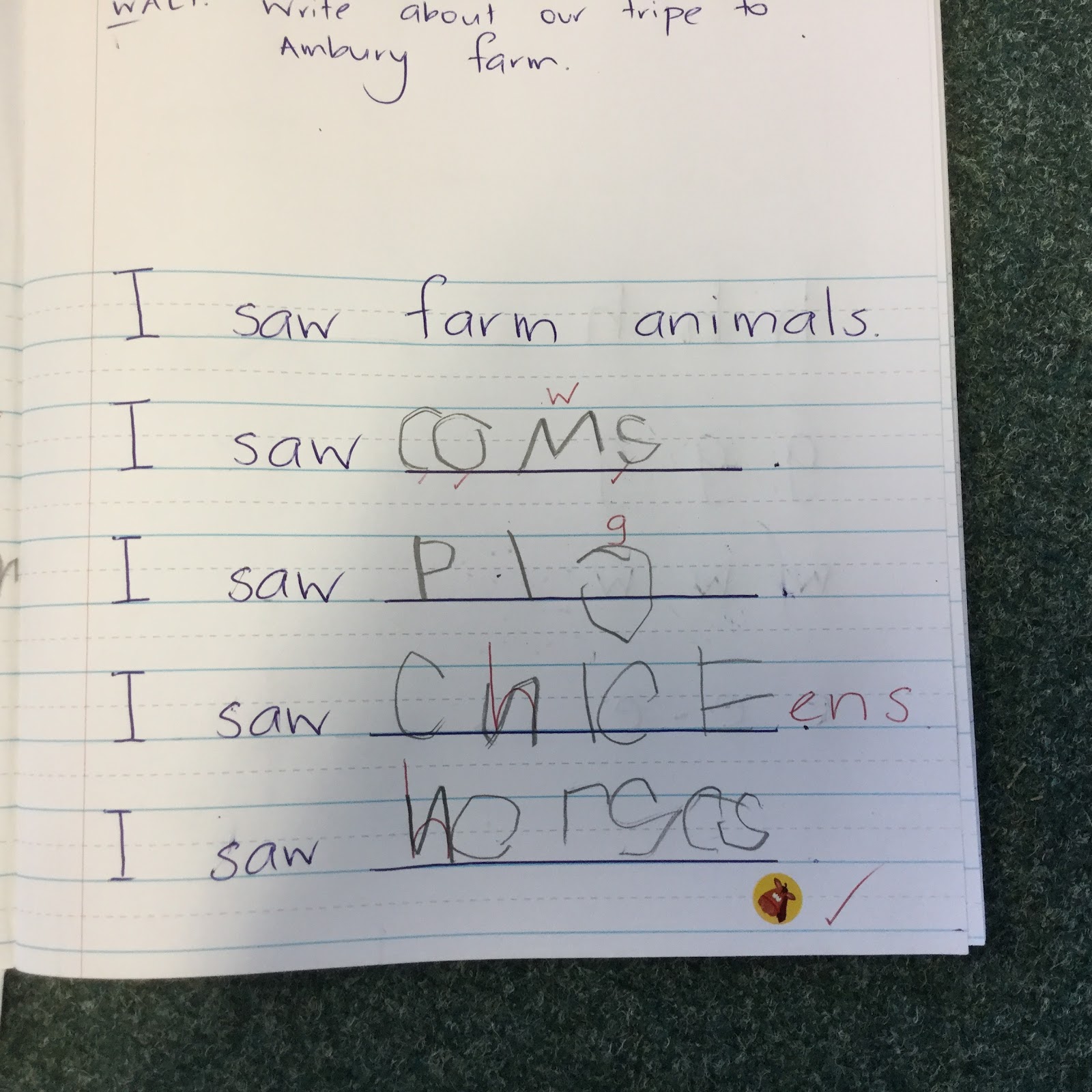
Here are some examples of students writing