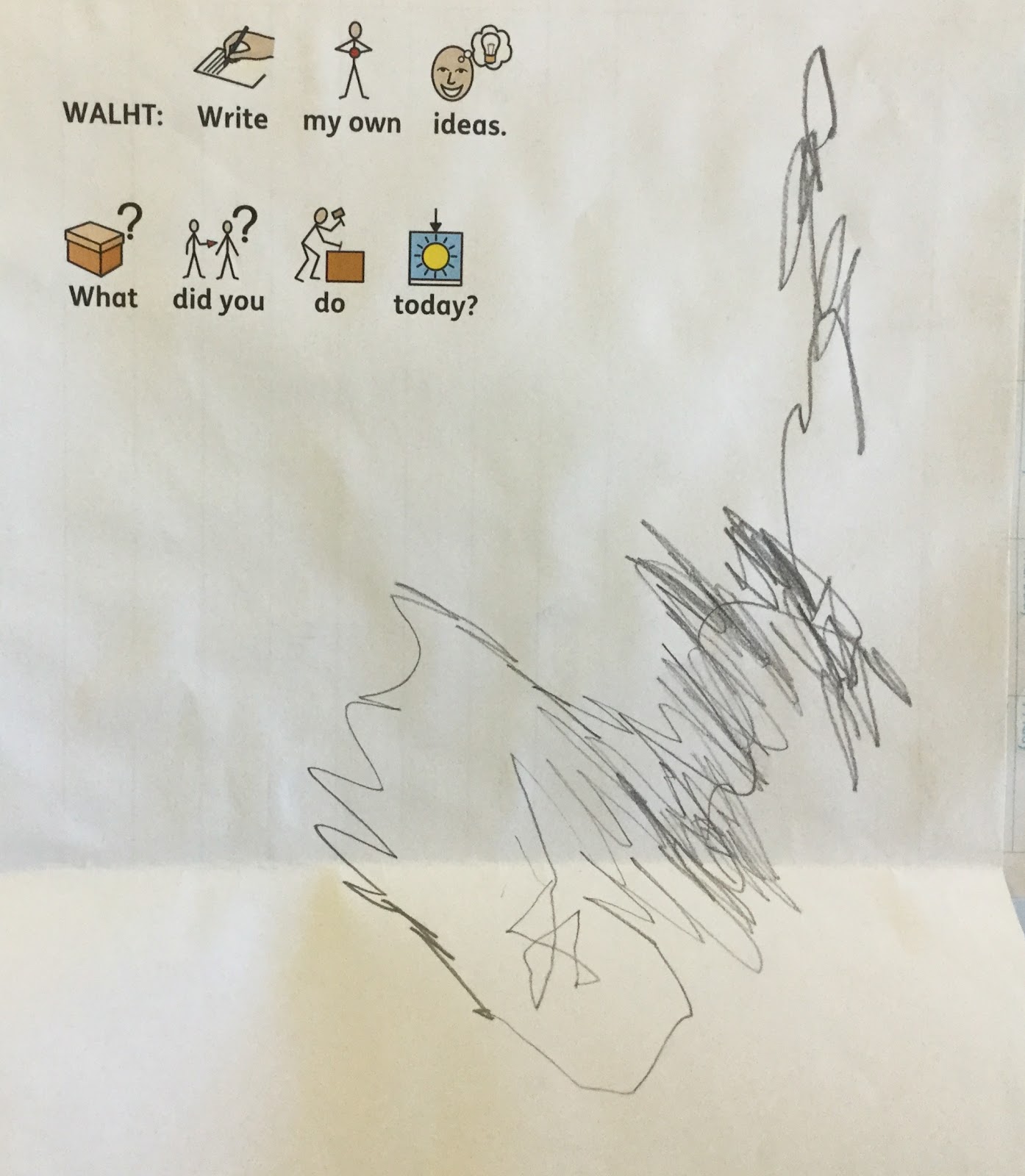
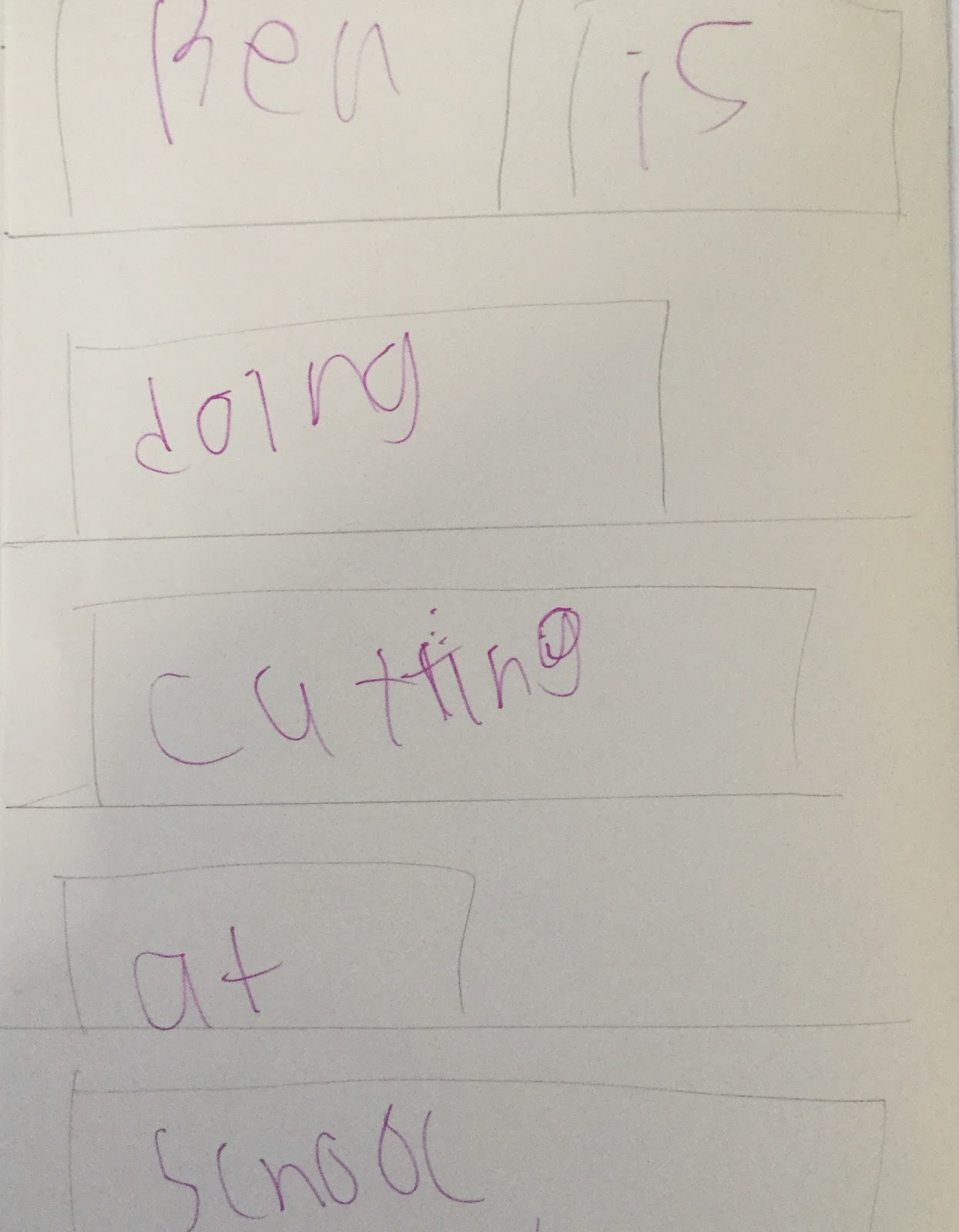
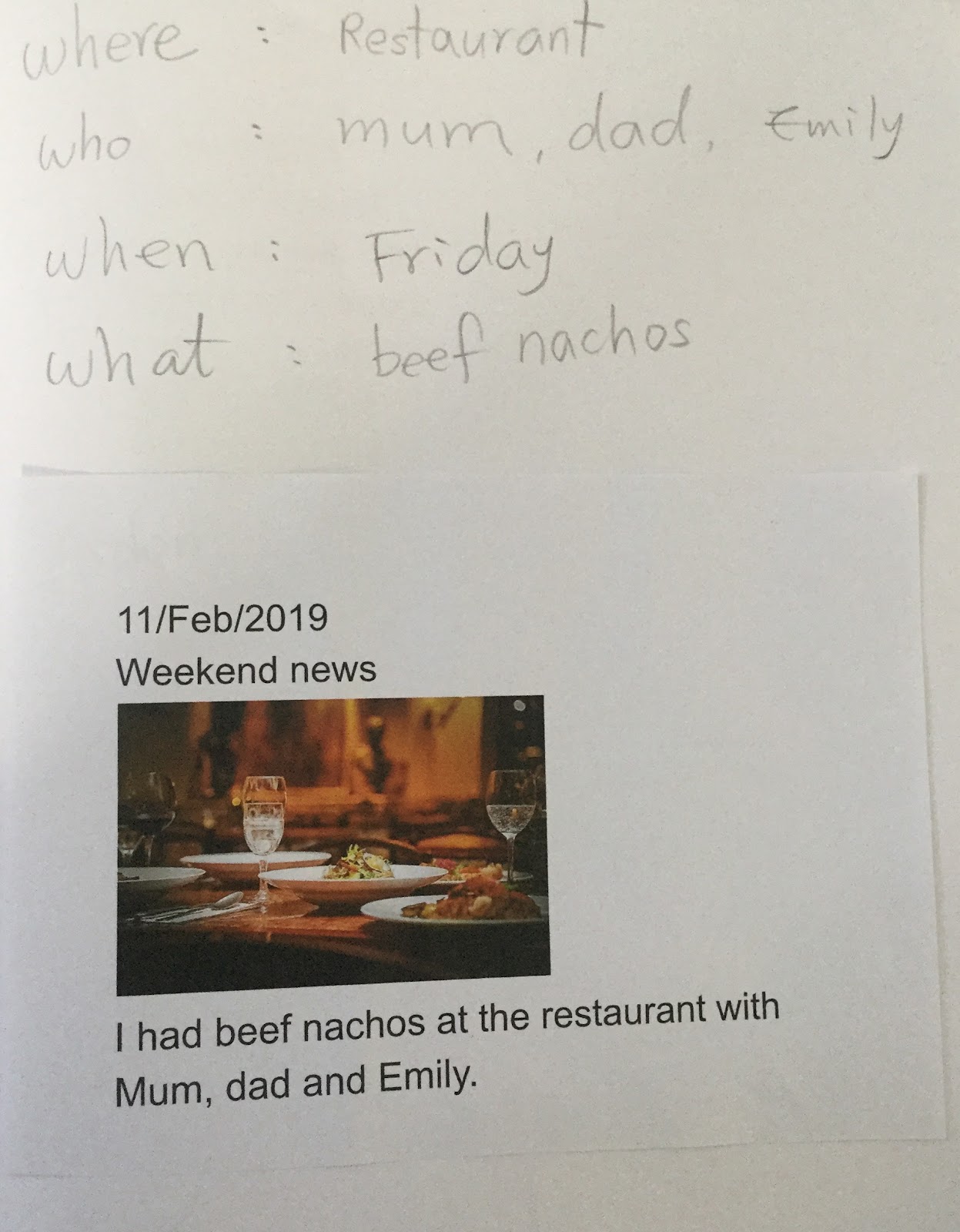
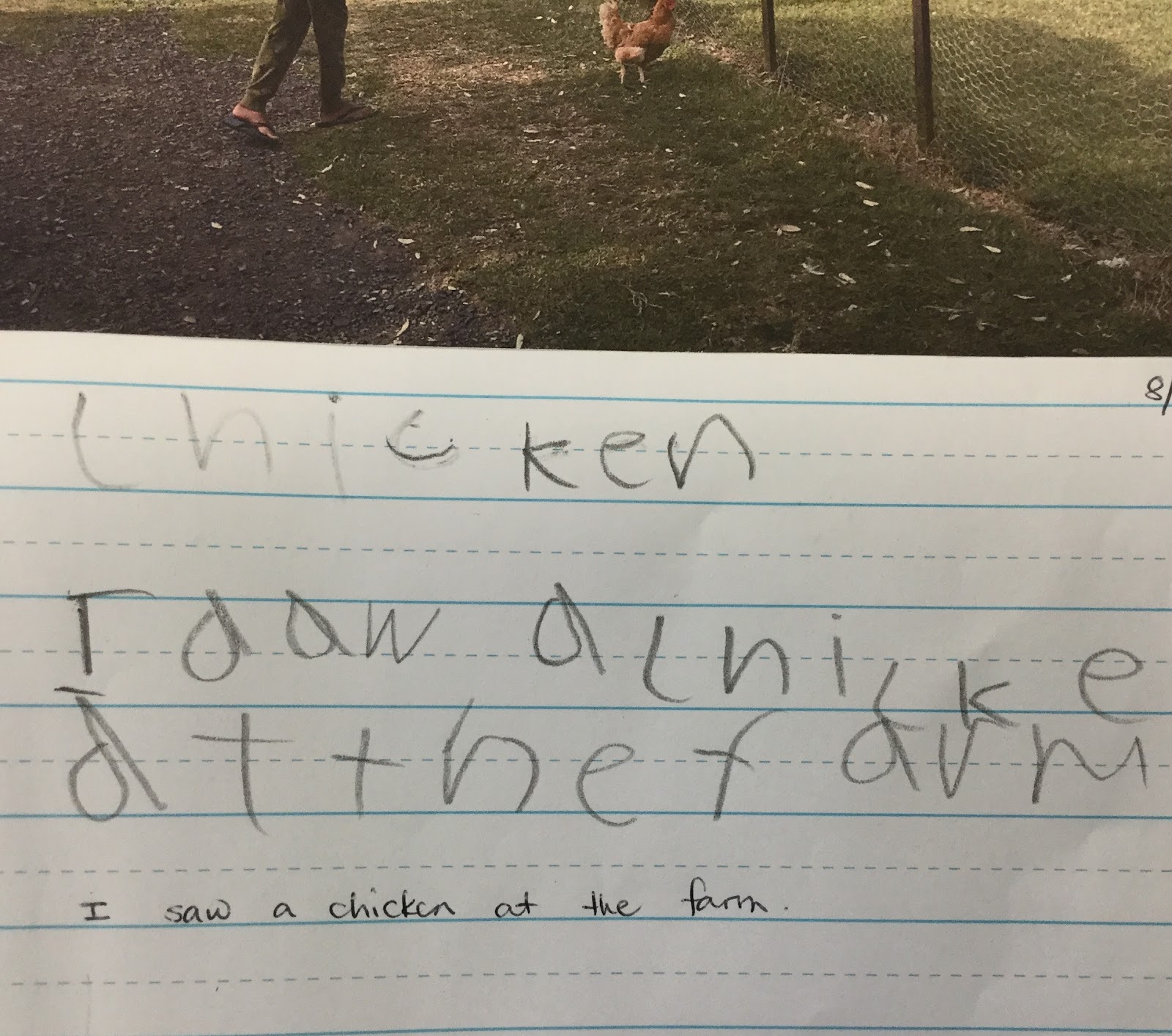
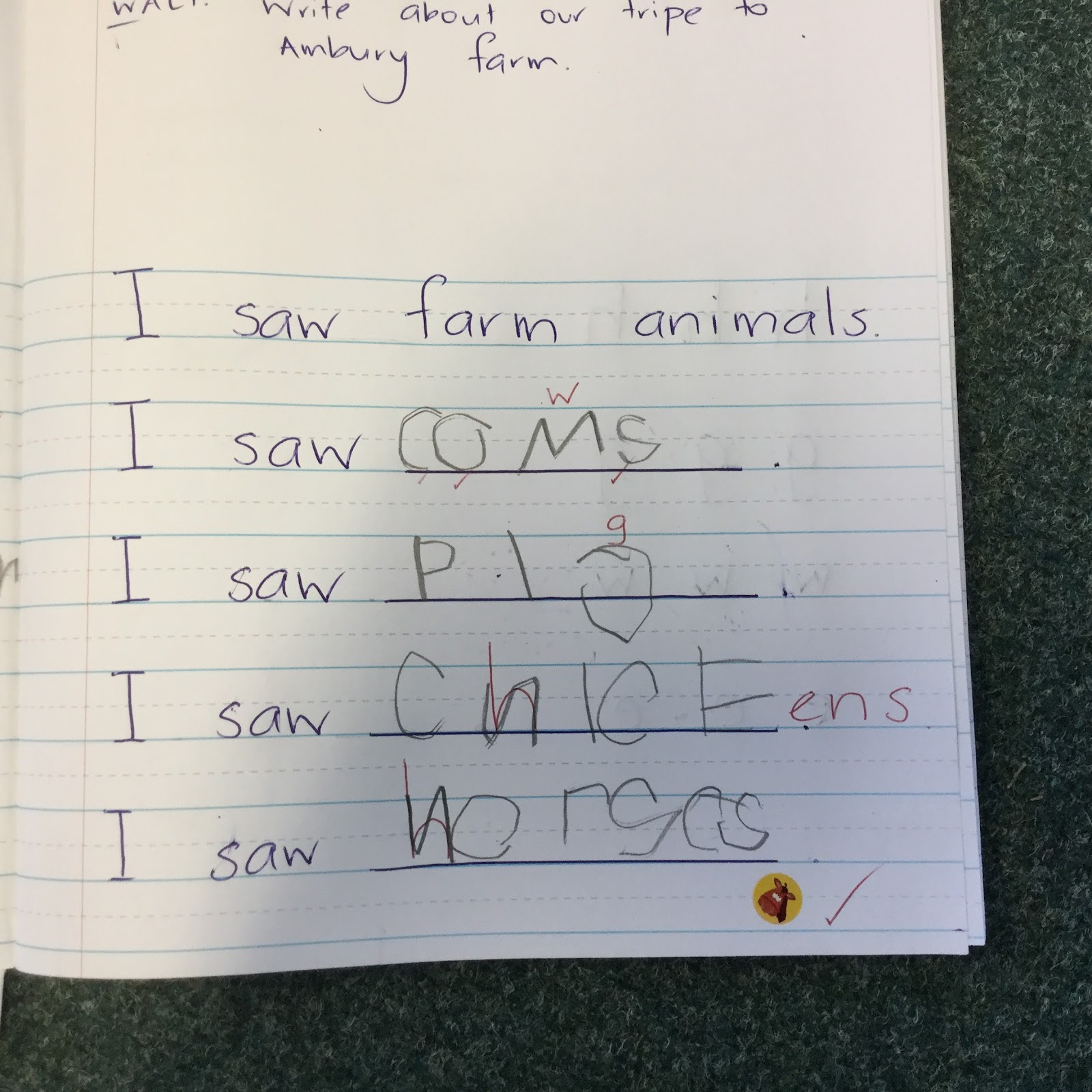
This student is able to form simple sentence and I am now working on expanding his sentence by adding adjectives . This is some of the work he produced. He felt very proud of his work.
I am a teacher at Sommerville Special School. All of the students I work with have Neuorodevelopmental disorders, some of whom have complex communication needs and/or relatively limited experiences of generating language. My blog this year is based on collaborative practice in a Special needs setting. Enjoy the journey....
Showing posts with label real reasons. Show all posts
Friday, 20 September 2019
Expanding sentences
Due to the complex needs of the students I work with, mastering a skill takes longer than other neuro typical students. We have been working on forming simple sentences for most of the year. It is great to see that the students are finally beginning to achieve this.
This student is able to form simple sentence and I am now working on expanding his sentence by adding adjectives . This is some of the work he produced. He felt very proud of his work.
Friday, 13 September 2019
Using Visual supports for writing
Last Friday we held a workshop here at Sommerville and invited SENCO's teacher's and teacher aides to participate. My colleague Donna and I presented on teaching reading and writing to Children with Special Educational needs. This was well received by all who attended.
As part of my presentation I reiterated to importance of using visuals with our students. I also demonstrated how to use Colourful Semantics and showed the progress students have made using this programme. In my previous blog posts, I shared more information on Colourful Semantics, so please have a look.
In this post, I would like to share a WOW moment we had with one of my students who would not engage in writing. We have been using 'Who, doing what , where". Here are some visuals that we used.
This student , who has very complex needs, was not engaging is any form of writing, but after many attempts at using 'Draw and talk', as explained in my previous blogs and engaging the student with real experiences, the students attempted to write ' I want to go to the beach hotel". This was a huge moment for the student and celebrated by all.
He had gone on holiday and we used the 'real life experience' to encourage him to write about his holiday. He was not motivated to write independently, so we used the photos from his holiday and asked him what was happening in each photo. We also used , 'Who, doing what" This is what he said. I added it to clicker sentences and the student was able to put the sentence in the correct order. He felt really proud of his work and wanted to share it with his teachers and family.
Friday, 26 July 2019
Monitoring change
Achievement Challenge 5
|
Theory of action/ chain of events
|
Implementation of change
|
Monitoring the effects
|
Improve the achievement of students with additional needs in the learning areas of English/key competency using language symbols and texts
|
If students are able to manage themselves, will this help them improve their writing outcomes?
The areas of focus has been:
Will students be motivated to write and manage themselves if
They are asked to write for real/authentic reasons and if
They have the correct writing tool.
|
After looking at the research by Dr Sally Clendon, I encouraged whanau to be involved. Each week they sent in a range of photos from the weekend. These are the events that the student can relate to, they have had the experience and are more eager to share some information.
It is authentic and students are more motivated.
Photos are also used from daily school activities.
I also used the research that Jane farrall did on finding the correct writing tool. I investigated a range of alternative writing tools and trialled it with students.
Once they had a tool that they were successful using, students were more motivated to write.
Daily opportunities to write and explicit teaching had to occur.
|
I have noticed improved attitudes in students.
Students have a better understanding of what writing means.
They are more motivated to write.
Students are working on a task for longer periods and not giving up.
They are wanting to share their work both at school and at home.
They feel more confident in attempting writing.
The evidence is in the writing sample.
|
Tuesday, 11 June 2019
Questions we can ask about writing
As teachers , here are some questions we can ask about the way we teach writing.
Writing is a complex task, involving ideas, language, words, spelling and transcribing or selecting letters. We need to teach all of these skills – and eventually students need to be able to do all of these, within the one task, to become writers.
Overall guidelines
Overall guidelines
- Do you have time scheduled for an independent writing block every day?
- Are your students using a pencil or alternative writing tool that allows them to focus on the cognitive aspects of writing e.g. alphabet board, flip chart, keyboard, eye gaze system, iPad and app, computer, pen or pencil?
- Does their writing tool include access to all 26 letters of the alphabet?
- Do your students have real reasons for writing? (and remember – writing never involves copying and tracing; writing involves thinking of ideas, language, words AND transcribing)
- Do you model writing to your classroom each time before you ask them to write?
- Do you have a time for writer’s chair so that students can share their writing with others?
- For emergent students
- Are you giving your students lot of opportunities to learn the function of writing without focusing on the form e.g. following through on notes handed to you, writing yourself reminders and then using them, writing a morning message?
- Do they have daily opportunities to write without standards using a writing tool with access to all 26 letters?
- When they have finished writing do you say “now let me show you how I would write it” and model writing rather than interrupting them during the writing task or putting demands on their writing?
- Are you offering them a range of writing tasks, such as writing about personal experiences, high interest topics, classroom topics, letter writing, signing in?
- Are you following through on writing tasks e.g. posting letters?
- Do you have a daily or weekly shared writing activity, such as predictable chart writing?
For conventional students
- Do you focus your modelling of writing on different aspects of the writing task each day e.g. using the word wall, using capitals, using punctuation, thinking of ideas, thinking of your audience in planning writing, using different sorts of vocabulary, etc.?
- Are you modelling aspects of writing for a while before you expect your students to start using them?
- Are you including free writing so that students learn to self-select in this block?
- Have you done a chart of topics “we all know about” with your class as ideas for free writing?
- Are you using the prompt “tell me more about that” to get students to extend their writing?
- Are you teaching students to edit writing, starting with teaching them to edit your writing and then transitioning to their own?
- Are you using editing checklists as students start self-editing e.g. “do my sentences have capitals and punctuation, do all my sentences relate to the topic”?
- Are you encouraging your students to publish?
Monday, 20 May 2019
Writing for real reasons
Why do we need to write for real reasons
When students know why they need to write, they will be more motivated to write.
My students are not motivated to write, they need to know why they must write, the purpose of writing and how is it going to help them.
These are some examples that can help.
Friday, 17 May 2019
Emergent writers
Supporting Emergent Writing
Hypothesis 1- writing for real reasonsIf I encourage my students to write for real reasons, then will they be motivated to write.
In Sally Clendon's research, she says that:
Students who write become better readers, writers, and thinkers.Students learn in classroom writing communities where they have the opportunity to:
– write for real reasons
– see others write
– interact with peers and teacher about the written content, use, and form.
– write without standards (i.e., without pressure to write neatly, spell correctly, and follow rules like capitalization, punctuation).
I will share some work that I am doing with one of my students who is working at level one. Due to his intellectual and physical complexities, he requires lots of motivation to engage in writing. My biggest focus at the moment is for my student is to know why he needs to write ie, writing for "Real Reasons"
Writing for real reasons- Level 1
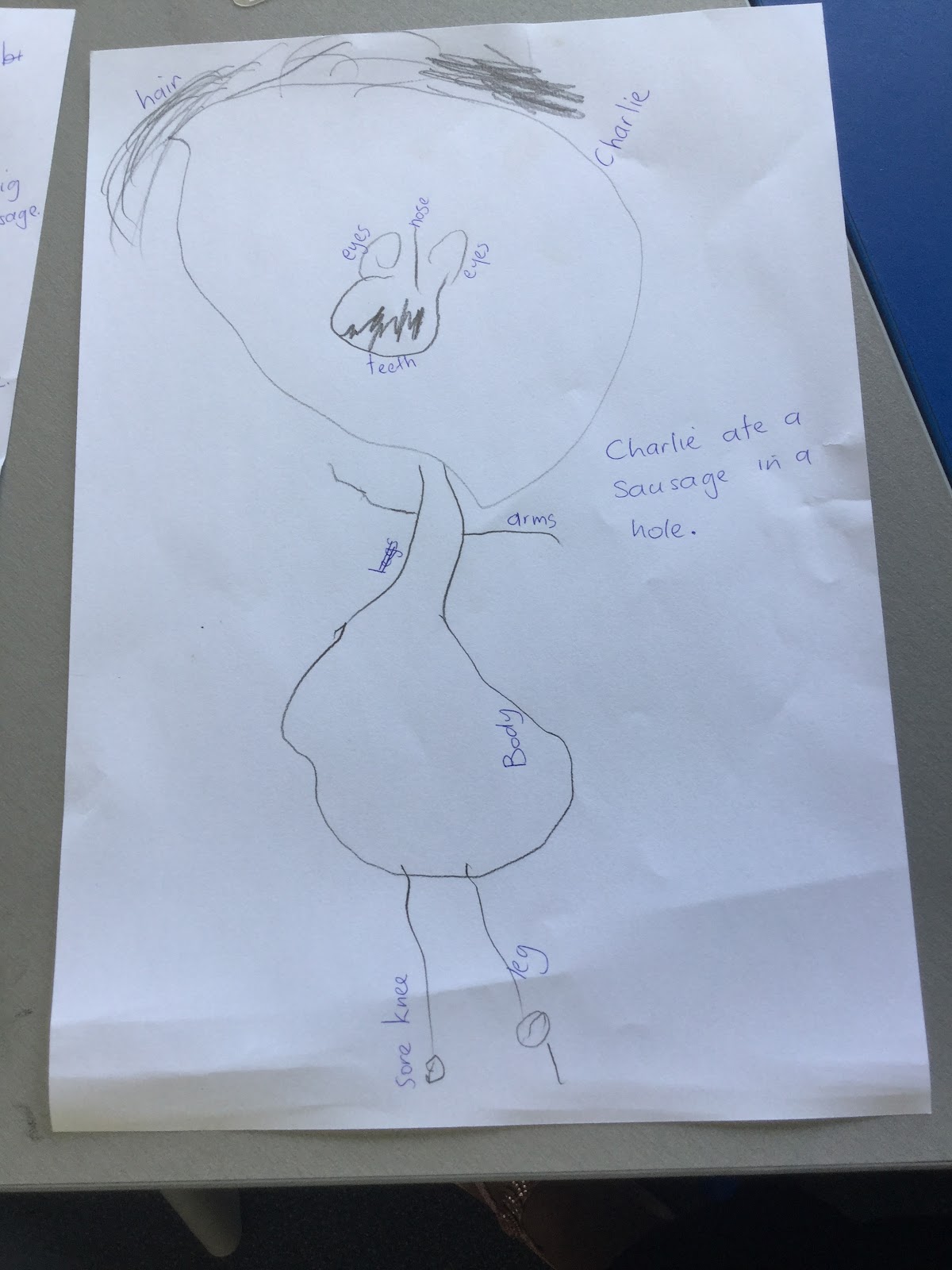
Student drew and shared his experience,
teacher recorded what was said. |
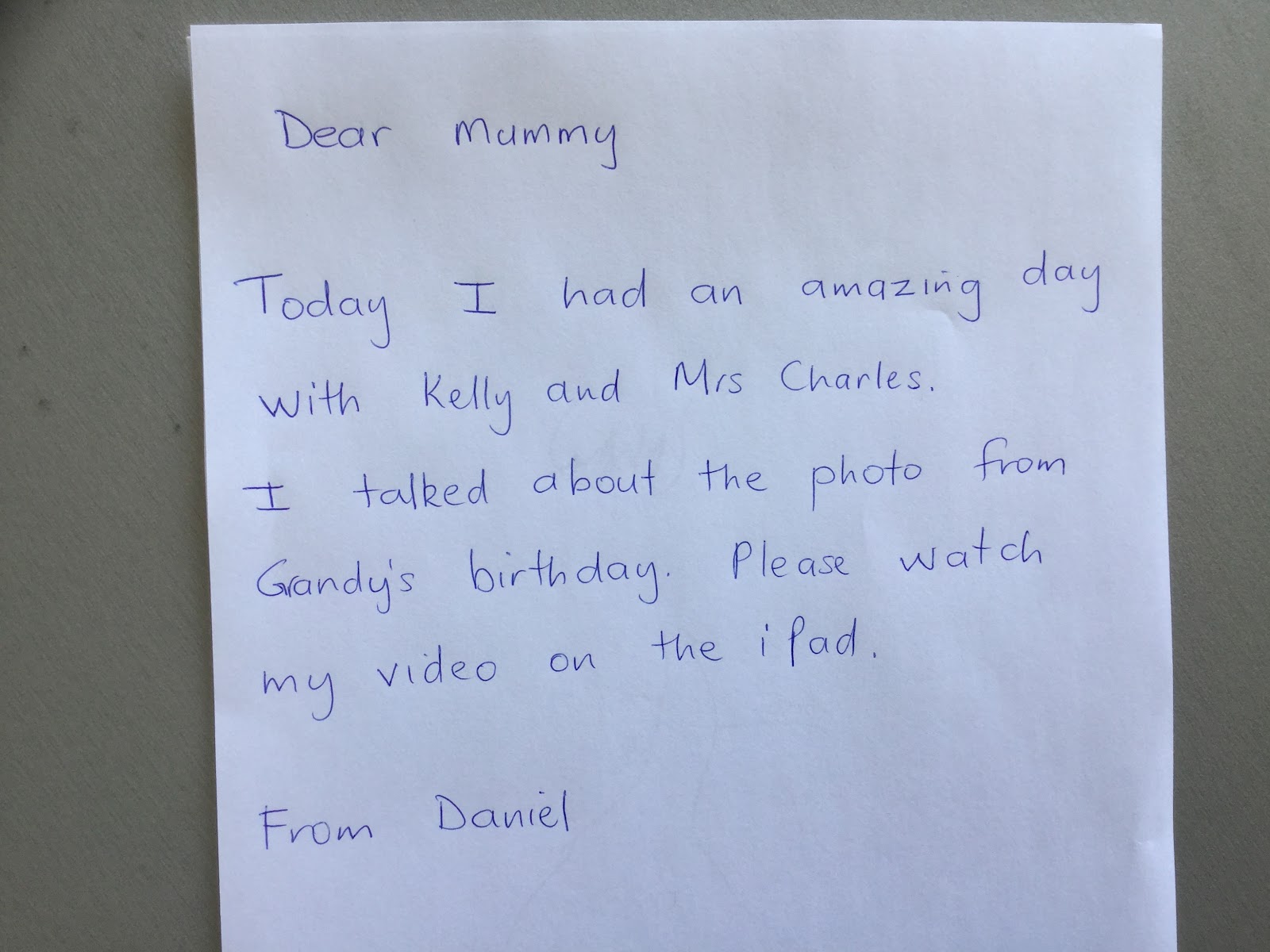
Teacher wrote a letter to family
so the student can see a real reason for writing. |
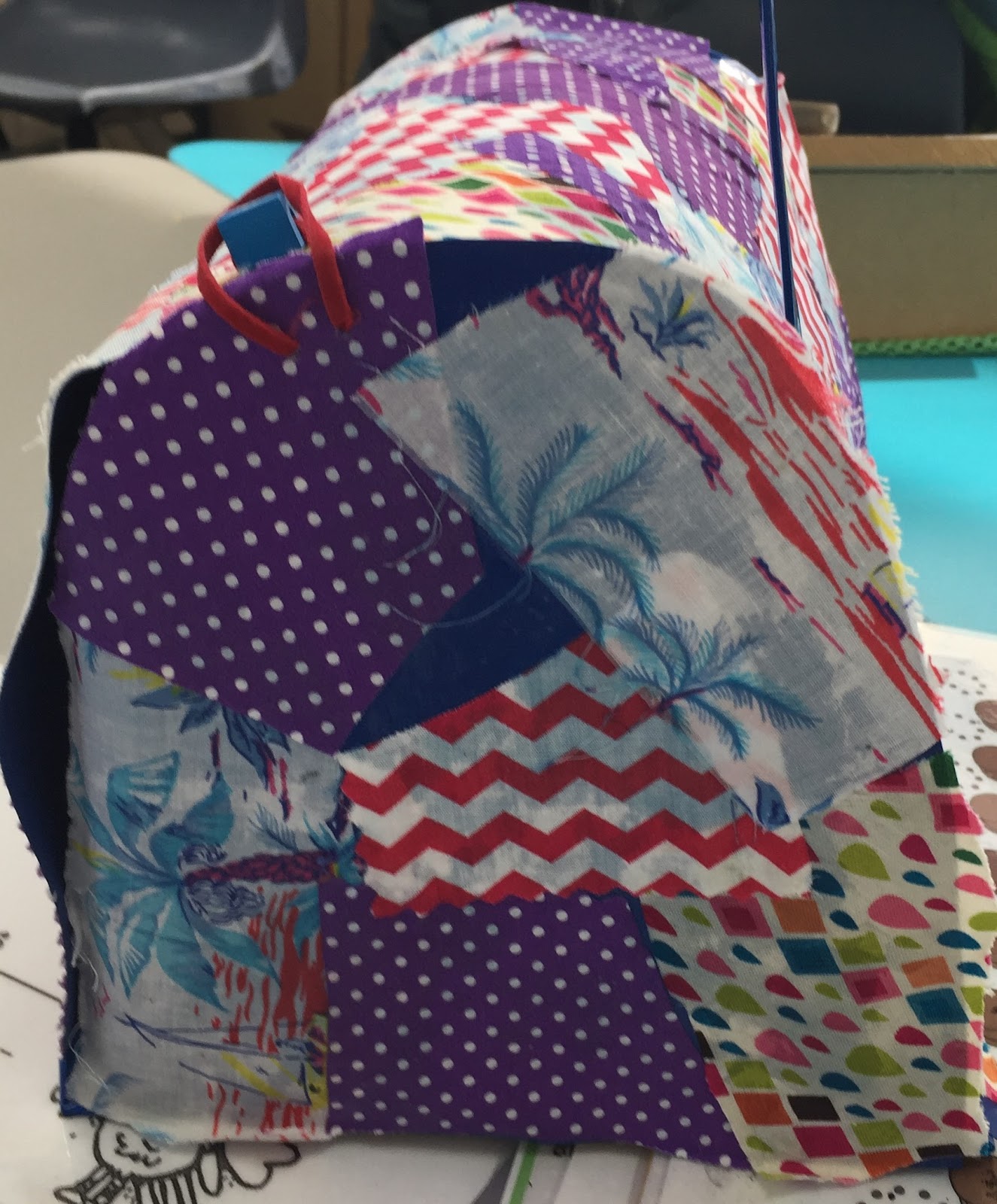
Family made a postbox to sent
and receive letters |
Students at school also send letters
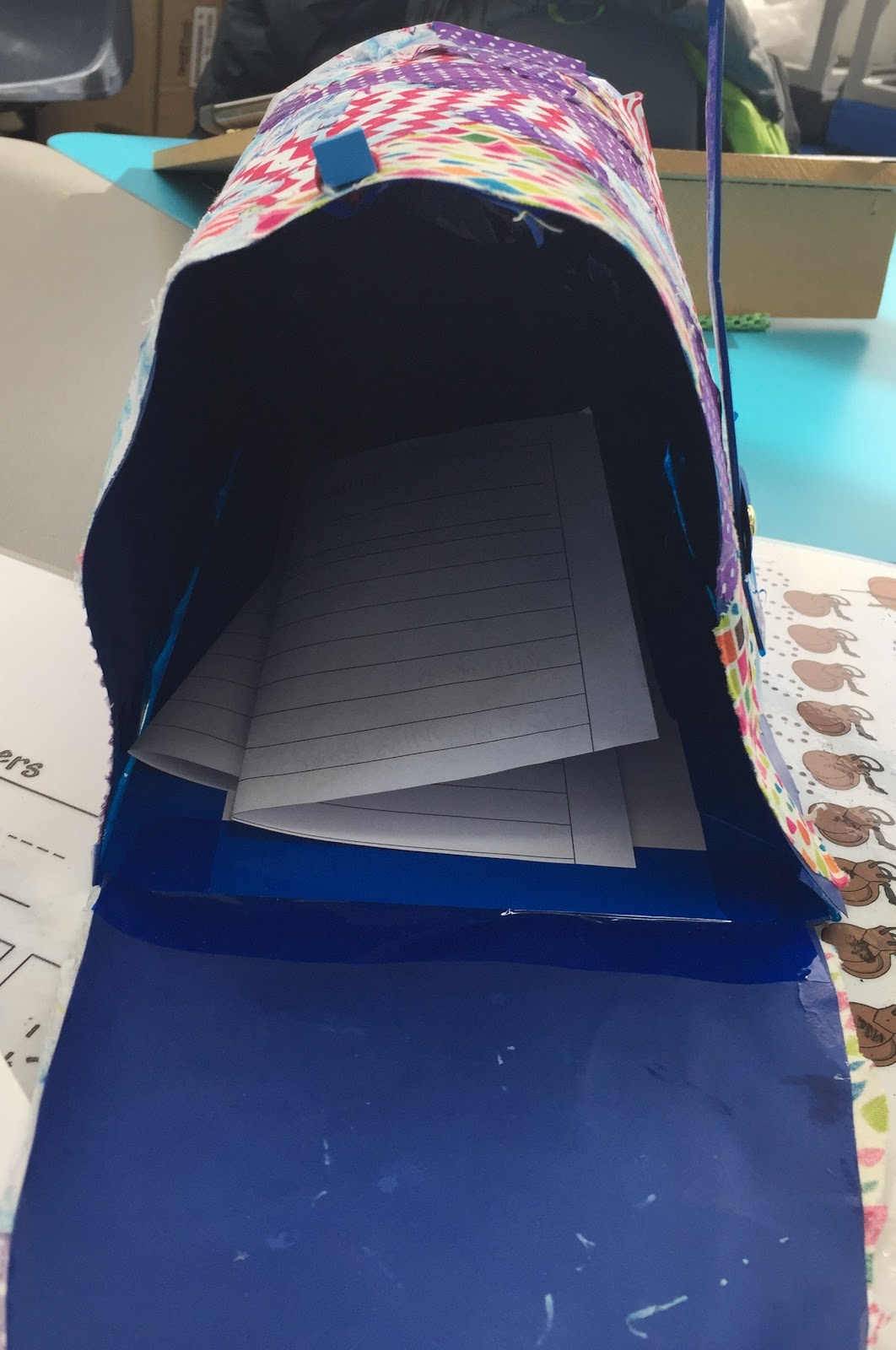
|
Student is asked to describe the object
using his senses. |
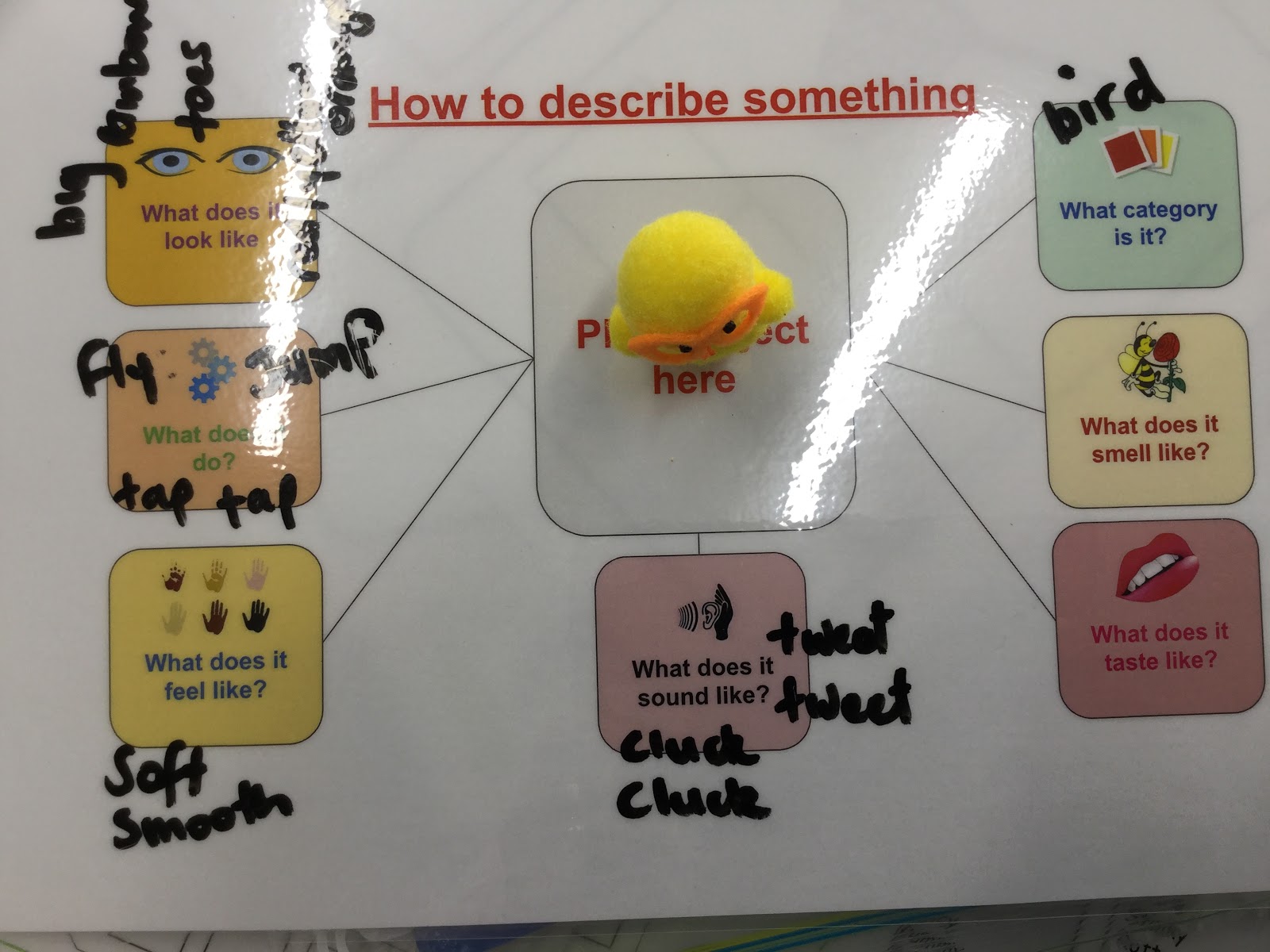
Prompts that can be used
|
Student tells the story, teacher writes,
leaving opportunities for student to attempt writing. |
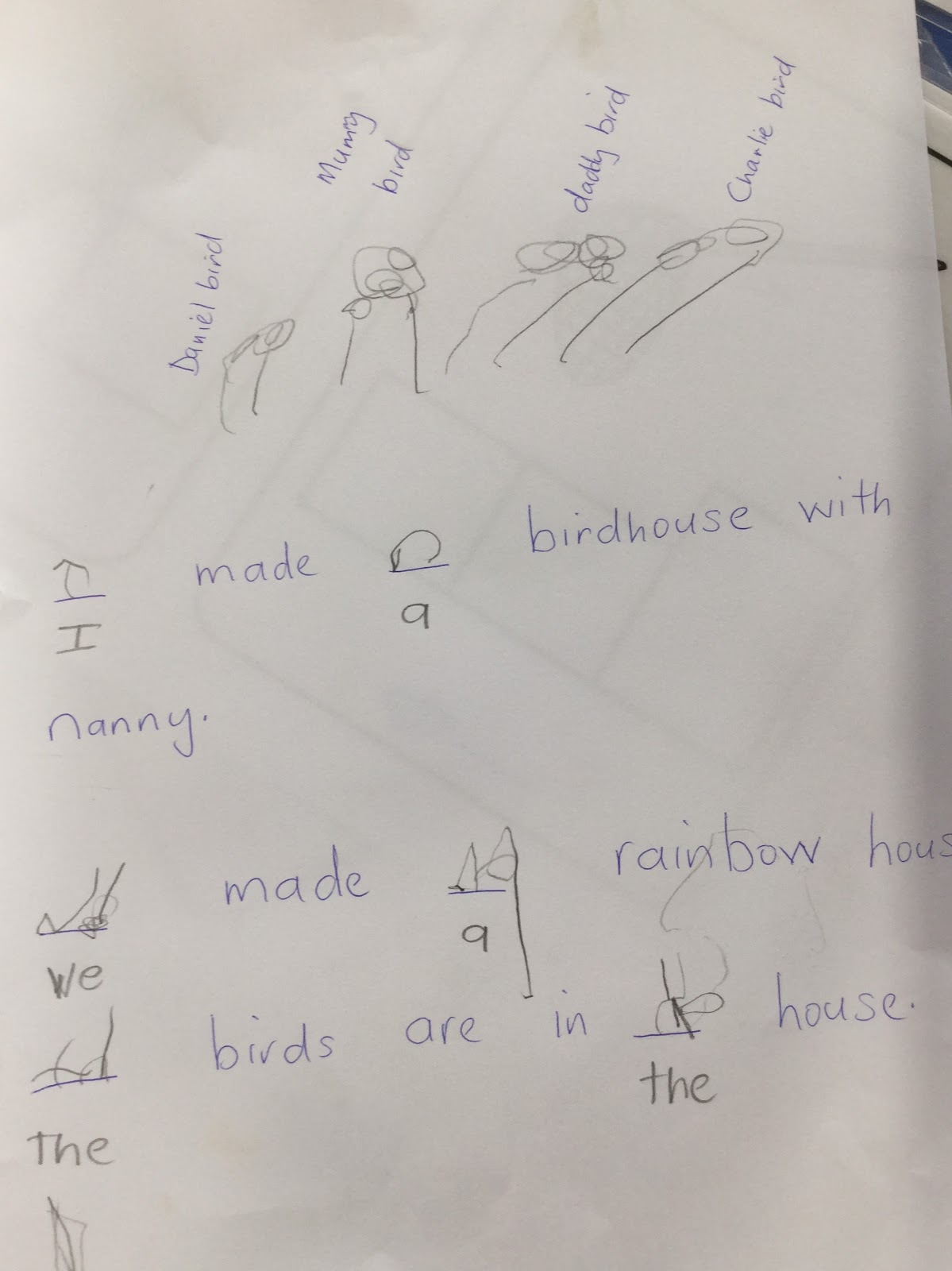
Student attempting independent writing
|
Wednesday, 10 April 2019
What writing looks like at some Sommerville classes.
Emergent Writing
At Sommerville most students are emergent writers
Children explore and experiment with writing. In the process, they develop understandings about the functions and form of print. These understandings become increasingly sophisticated. Hanser (2006)
Writing is about ...
• Sharing
ideas and communicating with others.
• Writing
for real reasons.
• Thinking
and actively constructing print.
• Exploring
the alphabet.
Making independent attempts.
At Sommerville, we believe that every child needs a writing tool
A writing tool includes:
- – Pencils / Pens
- – Flip charts
- – Alphabet boards
- – Eye gaze
- – Keyboards with talking word processors
- – Alternate keyboards
- – Simplified keyboards
- – Onscreen keyboards
- – iPads and apps
- – Speech generating devices
- - Predictive text software
Here are some examples of students writing
Subscribe to:
Posts (Atom)